A Big Three comparison becomes useful when it describes the interaction between two people rather than listing three separate traits. One person’s Sun may meet the other person’s Moon with warmth, while their Rising signs create a fast first exchange that later needs more patience.
This is the applied guide: Person A’s Sun, Moon and Rising compared with Person B’s placements. It does not decide whether a relationship will work. It shows where the two people may understand each other quickly, where their timing may differ and what a repair conversation might require.
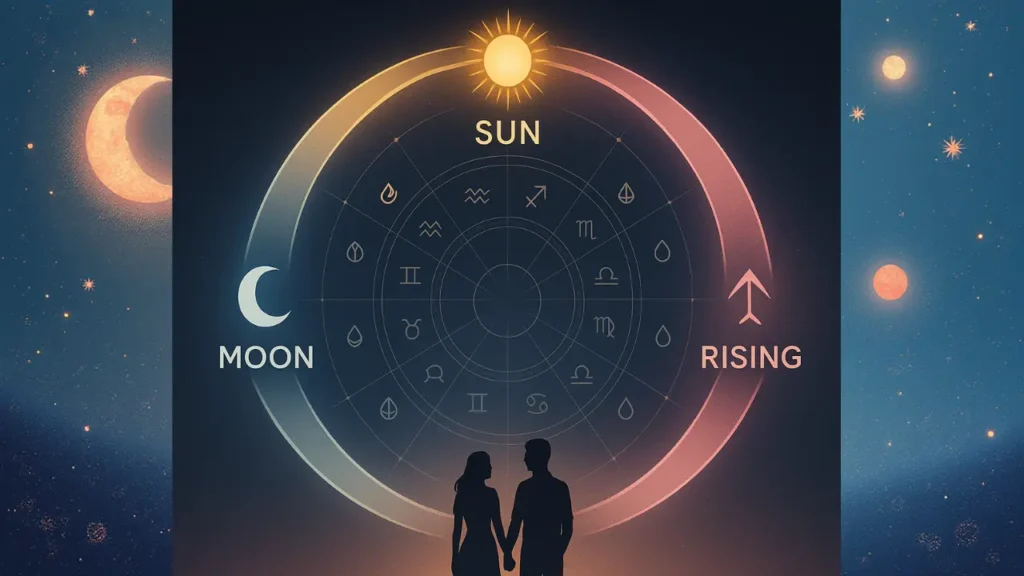
Start With Person A’s Sun and Person B’s Placements
The Sun comparison begins with identity and personal direction. If Person A wants direct recognition and Person B’s Moon needs quiet reassurance, praise may land well only when it is followed by a private check-in. If Person B’s Rising responds with humour, Person A may read that first response as confidence or as a refusal to take the subject seriously.
When the Sun Meets the Moon
Sun–Moon contact is easiest to understand through daily scenes. One person may want to talk about plans in a confident, public way, while the other first asks whether the plan feels emotionally safe. Friction starts when the Sun treats hesitation as a lack of support and the Moon experiences the same push as pressure.
When the Sun Meets the Rising Sign
Sun–Rising contact describes the visible start of interaction. One person’s direct style may draw the other into conversation, or it may feel too forceful when the second person prefers to observe before responding. The first impression is a beginning, not proof of lasting ease.
Moon Interactions: Comfort, Hurt and Repair
Compare the Moon placements by asking what happens after disappointment. A person who wants immediate reassurance may send several messages, while a person who recovers privately may stop replying until their thoughts settle. The first can hear silence as rejection; the second can hear repeated questions as pressure. Repair begins when the second gives a clear time to return and the first asks for reassurance without demanding an instant answer.
Mixed Emotional Patterns
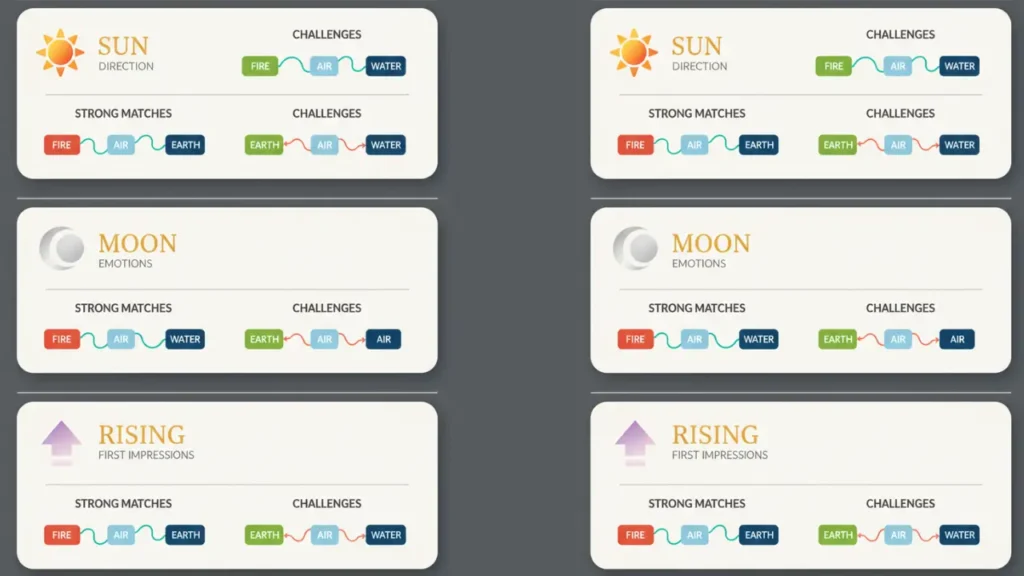
Two Moons do not need to respond in the same style. A more useful reading asks whether both people can name the difference. Water-style sensitivity may need a gentle tone and time to settle. Earth-style responses may prefer routine and a practical next step. Air-style responses may need words and context, while fire-style responses may speak quickly and need a direct answer before frustration rises.
Rising Interactions: How Contact Starts
Rising signs show the early social rhythm: who starts talking, who uses humour, who needs a little distance and who becomes direct when the room feels uncertain. These patterns can create attraction, but a pleasant first exchange does not erase a later mismatch in emotional needs or personal priorities.
Mixed Patterns: When One Placement Helps and Another Rubs
| Comparison | May feel easier when | May need care when |
|---|---|---|
| Sun with Moon | identity is expressed with room for reassurance | confidence is used to dismiss private feelings |
| Moon with Moon | both people name their comfort needs | one withdraws while the other follows for an answer |
| Rising with Rising | first contact has a similar pace | one pushes contact before the other is ready |
| All three together | the visible style and private needs can be discussed | a strong first impression hides repeated repair problems |
A Worked Big Three Comparison
Suppose Person A has a Leo Sun, Pisces Moon and Gemini Rising. Person B has a Virgo Sun, Aquarius Moon and Scorpio Rising. Person A may speak warmly and move quickly into conversation, while Person B may watch the room and prefer a precise plan. The attraction can start through the Rising signs, but the Moon comparison may require care when Person A asks for emotional closeness and Person B asks for space.
The practical question is not whether the pair is good or bad. Ask whether Person A can make a clear request without turning silence into a verdict, and whether Person B can explain the need for space without leaving the other person guessing. Those actions matter more than a label attached to the pair.
How to Use This Comparison
Use the Big Three parent guide when a term needs defining. Use the Sun and Moon guide when identity and emotional response are the central question. If the comparison depends on planets, houses or aspects, move to Full Chart compatibility rather than stretching a sign-level result beyond its scope.
FAQs
Which placement should I compare first?
Start with the Sun for visible priorities, then compare the Moon for emotional safety and the Rising sign for the first social response. The order keeps the comparison from becoming a list of disconnected traits.
Can one supportive placement erase a difficult one?
No. A supportive interaction may make repair easier, but it does not remove a repeated mismatch in timing, reassurance or personal priorities.
Why can attraction feel strong at first and uneven later?
Rising signs can shape first contact, while Moon needs and Sun priorities appear with more time. A first impression can be genuine without answering every relationship question.
Does a difficult Big Three comparison predict failure?
No. It points to a place where the two people may need clearer requests, more patience or a better repair habit. Behaviour still decides what happens next.