When you first think about astrology and love, Sun sign matches are usually the first idea that comes to mind. You can easily recall pairs like Aries with Leo, Virgo with Taurus, or Pisces with Scorpio. These combinations are common starting points for compatibility talks.
But the thing is that astrology goes much more in-depth than just Sun signs. A complete chart comparison looks at planets and houses to reveal stories of how two people interact daily.
Planets explain attraction, emotions, and conversations, while houses show where love plays out in real life. In this post, you will see how planets and houses shape compatibility, with examples, tables, and a checklist that you can follow.
What is Astrology Chart Compatibility?
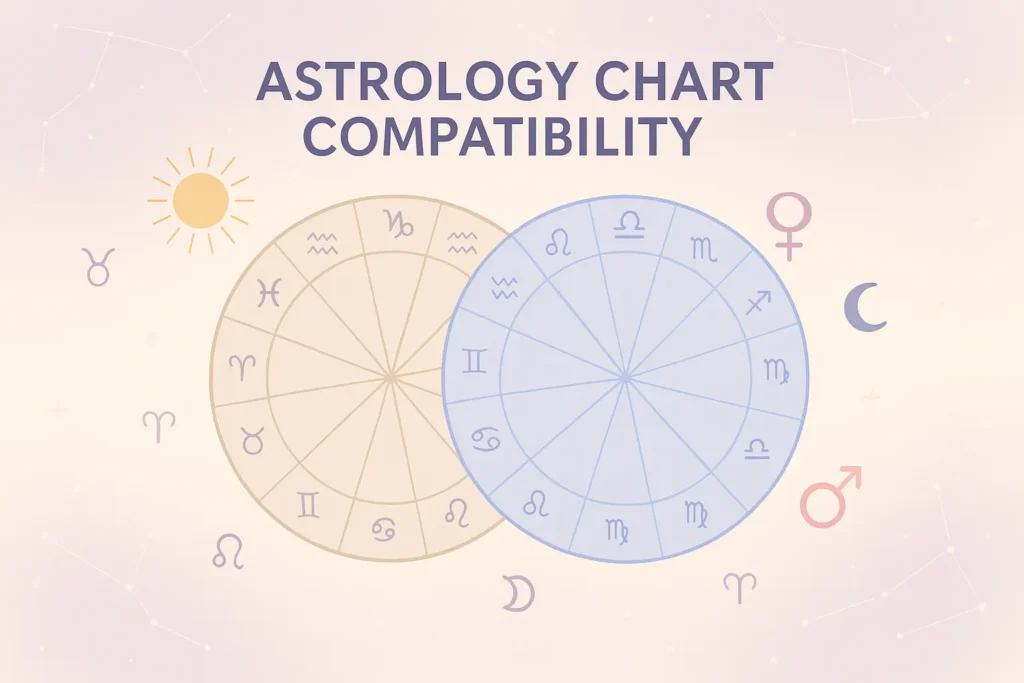
Astrology chart compatibility is the study of how two charts blend. You can see this through synastry charts, where one chart is compared with another to spot connections, and through composite charts, where both charts merge into a single “relationship chart.”
In compatibility readings:
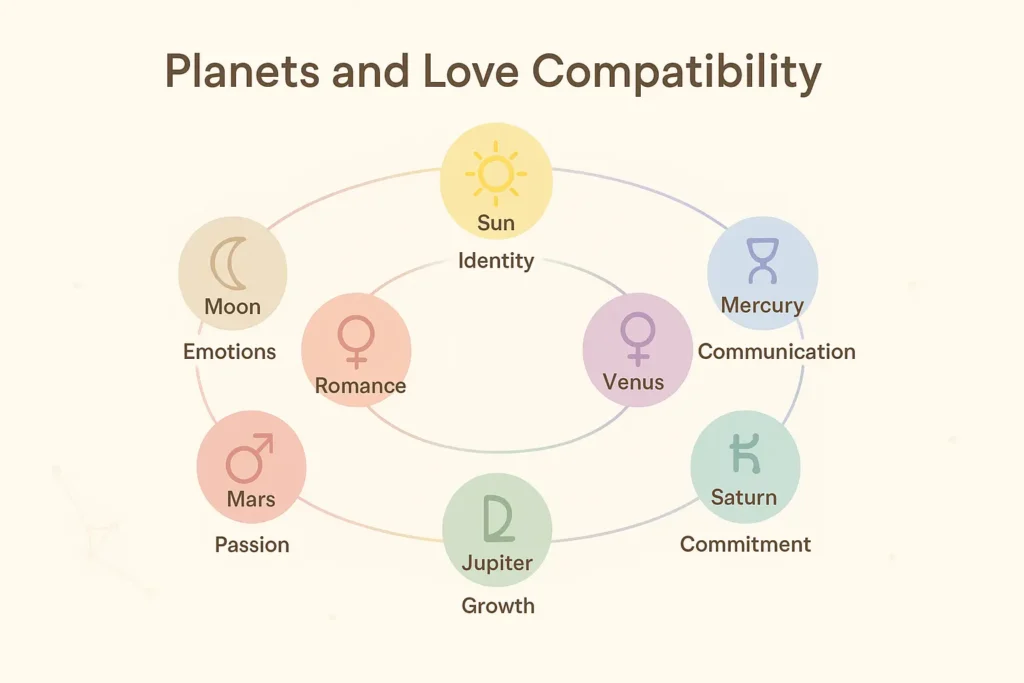
- You can check personal planets (Sun, Moon, Mercury, Venus, Mars) for identity, feelings, romance, and passion.
- You can look at outer planets (Jupiter, Saturn, Uranus, Neptune, Pluto) for growth, discipline, and transformation.
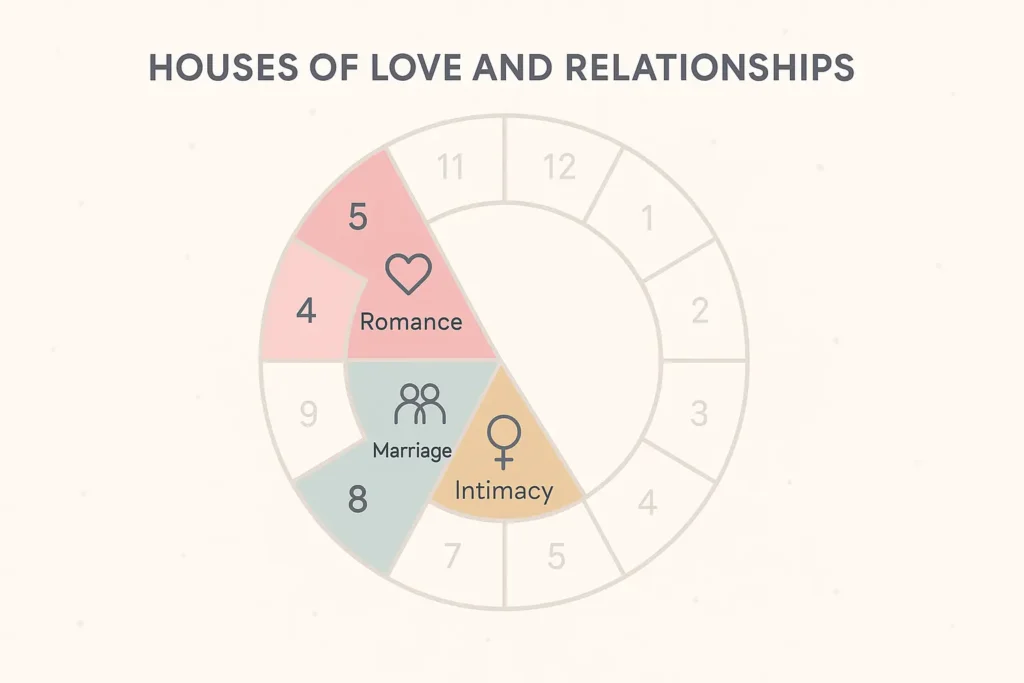
- You should also study houses, since they reveal areas of life that are activated, like love, marriage, or friendship.
The point is simple here: when you put all these parts together, you get a full picture of how two people connect, from first attraction to long-term commitment.
Planets and Love Compatibility
Sun: Core Identity
The Sun shows personality, ego, and life path. When Suns align, both partners share goals. When Suns clash, it may feel like they walk on different roads.
- Example: You can see Sun trine Sun as shared values and mutual respect.
- Example: Sun square Sun feels like ego clashes and different approaches.
Moon: Emotional Bond
The Moon represents comfort, emotions, and instincts. It controls how safe you feel with someone.
- Example: Moon conjunct Moon shows emotional safety.
- Example: Moon square Moon brings mood conflicts.
Mercury: Communication
Mercury shows how couples talk, think, and solve problems.
- Example: Mercury trine Mercury feels like smooth conversations.
- Example: Mercury opposite Mercury can mean different talking styles and debates.
Venus: Love Language
Venus describes attraction and romance.
- Example: Venus conjunct Venus means same love style.
- Example: Venus opposite Venus shows attraction with contrasts.

Mars: Passion and Drive
Mars shows sexual energy and action.
- Example: Mars sextile Venus feels playful and exciting.
- Example: Mars square Mars can create competition and heated conflicts.
Jupiter: Growth and Joy
Jupiter brings optimism and learning.
- Example: Jupiter conjunct Sun feels uplifting and generous.
- Example: Jupiter opposite Venus may feel generous but indulgent.
Saturn: Commitment and Lessons
Saturn represents discipline, maturity, and long-term stability. It may feel heavy but it brings strength.
- Example: Saturn conjunct Moon feels serious and steady.
- Example: Saturn square Venus can feel like restrictions in love.
Uranus, Neptune, Pluto
- Uranus: sudden change, independence, and surprise.
- Neptune: dreams, spirituality, and sometimes illusions.
- Pluto: transformation, power, and deep bonds.
These three add intensity, lessons, and long-term shifts to relationships.
Houses and Love Compatibility
5th House: Romance and Fun
This is the house of joy, play, and romance. If your partner’s Venus or Sun falls here, the bond feels light and creative.
7th House: Partnership and Marriage
This is the house of long-term bonds. If your partner’s planets fall here, it shows strong partnership energy.
8th House: Intimacy and Transformation
This is the house of shared resources and intimacy. Planets here bring passion but also emotional lessons.
11th House: Friendship and Shared Vision
This house shows friendship and shared dreams. Many couples with strong 11th house connections begin as friends.
Other Houses in Love
- 4th house (home, family) – foundation for long-term growth.
- 9th house (philosophy, travel) – shared spiritual and learning journeys.
Example Chart Match Breakdown
- Person A: Venus in Taurus, Mars in Aries, Sun in Gemini.
- Person B: Venus in Capricorn, Mars in Leo, Sun in Libra.
Analysis:
- Venus in Taurus and Capricorn shows steady love.
- Mars in Aries and Mars in Leo show fire, passion, and drive.
- Sun in Gemini and Libra are both air signs, showing mental flow.
- Result: This pairing shows stability, excitement, and communication.
Composite Chart in Love
Composite charts combine two natal charts. They show the “personality” of the relationship itself.
- Example: Composite Venus in the 7th house shows love centered on partnership.
- Example: Composite Mars in the 8th house shows passion and transformation.
This method shows how a couple works as one, not just as two individuals.
Astrology Chart Compatibility Table
| Planet/House | Role in Love | Positive Influence | Challenges |
|---|---|---|---|
| Sun | Personality | Shared goals | Ego clashes |
| Moon | Emotions | Comfort, safety | Mood swings |
| Mercury | Communication | Understanding | Misunderstandings |
| Venus | Love language | Romance, attraction | Different styles |
| Mars | Passion | Chemistry, drive | Arguments |
| Jupiter | Joy | Growth, optimism | Overindulgence |
| Saturn | Stability | Commitment | Restrictions |
| 5th House | Romance | Spark, fun | Short-term focus |
| 7th House | Partnership | Marriage energy | Dependence |
| 8th House | Intimacy | Deep bond | Power struggles |
Benefits of Using Planets and Houses in Compatibility
- You can know more detailed outputs and results than Sun sign matches.
- You can see where attraction and challenges appear.
- You can understand why some bonds feel instant.
- You can see why some feel karmic or fated.
- You should use this to identify lessons and strengths.
Common Mistakes People Make
- You may check only Sun signs and skip Venus or Mars, which limits your understanding of how deeper love energy flows.
- You may ignore Saturn’s role in stability, and this can make you overlook the importance of maturity and responsibility in long-term bonds.
- You might forget the role of house overlays, even though they reveal which life areas a partner activates, such as romance, family, or marriage.
- You may believe challenges mean failure instead of lessons, but that view prevents growth and keeps you from learning through differences.
- You might miss composite charts that show the shared relationship story, which explains the overall personality of the partnership and how both people work together as one.
FAQs
Which house is most important for love compatibility?
The 7th house, since it rules partnership and marriage.
Do outer planets matter in love?
Yes, they shape long-term lessons and transformation.
Is Venus more important than Sun in relationships?
Venus shows romance style, while Sun shows personality.
Do house overlays decide marriage potential?
They show attraction and focus, but choice decides marriage.
Can Saturn aspects feel too heavy?
Yes, but they also bring stability if managed with patience.
Conclusion
Planets and houses add layers to love compatibility. Sun signs only scratch the surface, while Venus, Mars, Moon, and Saturn reveal deeper truths. Houses like the 5th, 7th, and 8th show where love energy expresses itself in daily life. You already know that astrology is guidance, not fixed destiny.
The real strength of love depends on patience, effort, and communication. When you look at planets and houses, you can better understand your partner and build a stronger bond.
Practical Checklist
- Note both partners’ birth details.
- You can check Sun, Moon, Venus, and Mars aspects.
- You should also review Jupiter and Saturn for stability.
- Look at house overlays (5th, 7th, 8th).
- Study the composite chart for shared energy.
- Use supportive and challenging aspects as growth tools.