Why Some Relationships Feel Emotionally Draining

How Emotional Drain Actually Feels in Daily Life

Many people assume that a draining relationship must be full of constant fighting, yet strain can exist even when arguments are not loud or dramatic. A relationship starts to feel heavy when one person repeatedly leaves conversations feeling worse instead of clearer, and when effort feels uneven instead of shared.

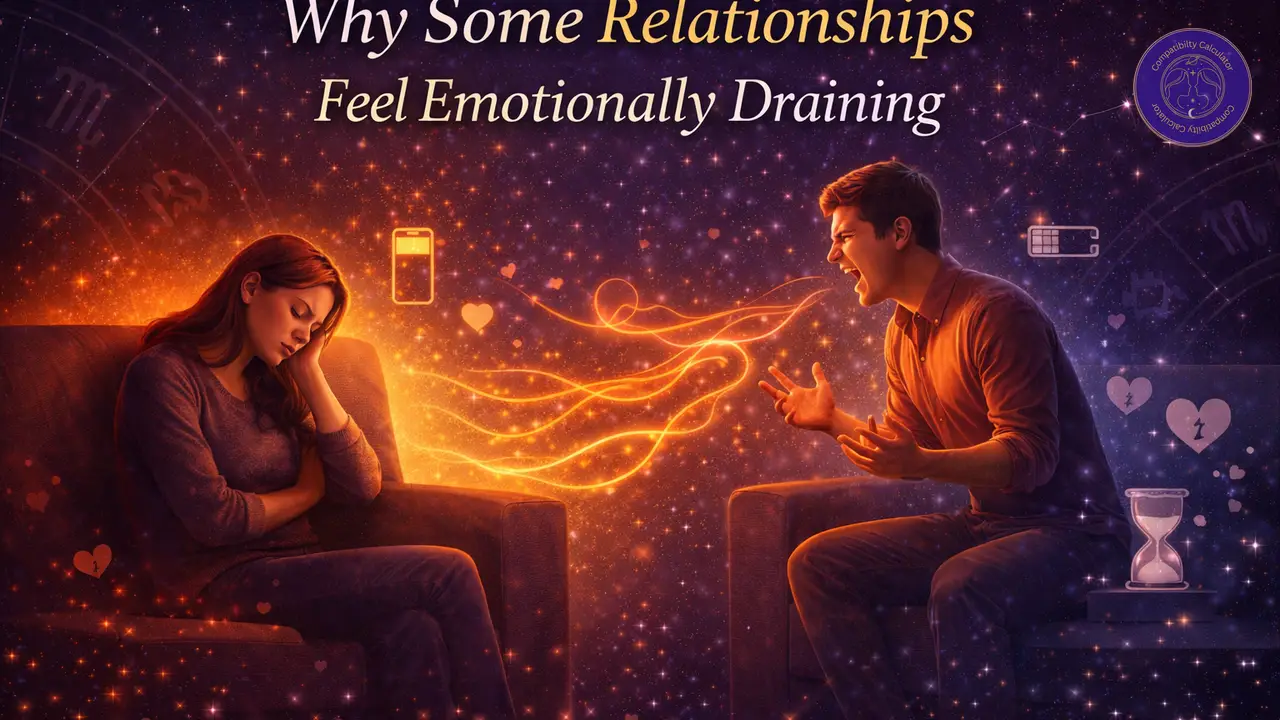
Emotionally draining relationships shaped by imbalance, exhaustion, tension, and unmet emotional recovery needs.
Emotional drain becomes visible when effort and recovery stop feeling balanced between two people.

Conflict by itself is not the problem, since healthy disagreement can bring clarity and even closeness. The problem begins when resolution does not restore energy, and when the same tension returns without real change.

Early Signs of Emotional Fatigue

Fatigue usually shows up in small patterns that repeat quietly over time, which is why it can be ignored for months before it becomes obvious.

  • One partner feels tired after every serious conversation, even when the topic was minor.
  • One partner explains simple concerns again and again because earlier discussions did not lead to visible change.
  • One partner feels responsible for managing the other’s mood during stress.
  • One partner avoids certain topics to prevent a reaction rather than because the issue is solved.

These signs may not look dramatic from the outside, yet inside the relationship, they create slow exhaustion because effort keeps moving mostly in one direction.

Normal Effort vs Draining Pattern

SituationHealthy EffortDraining Pattern
After disagreementBoth partners reflect and return calmlyOne partner continues carrying the tension alone
During stressSupport moves in both directionsOne partner absorbs most of the pressure
ReassuranceRequested occasionally and given freelyRequested repeatedly without lasting stability
CommunicationProblems reduce after discussionThe same issue repeats with little adjustment

The difference is not the presence of effort, because every relationship requires work, yet the difference lies in whether that work restores balance or quietly removes energy.

The Moon and Emotional Overload

The Moon represents instinctive reaction, so Moon patterns become very visible in relationships that feel heavy. One partner may release every feeling immediately and expect comfort right away, while the other partner absorbs those feelings without releasing their own, and over time imbalance grows.

When one person constantly absorbs frustration and insecurity without equal space to express their own state, fatigue builds even if affection remains present.

Micro Scenario

A partner comes home stressed and begins venting about work without pause. The other partner listens patiently and offers reassurance, yet their own difficult day remains unspoken because there is no space left in the conversation. This pattern repeats several times during the week, and slowly the listener begins to feel tired before the evening even begins.

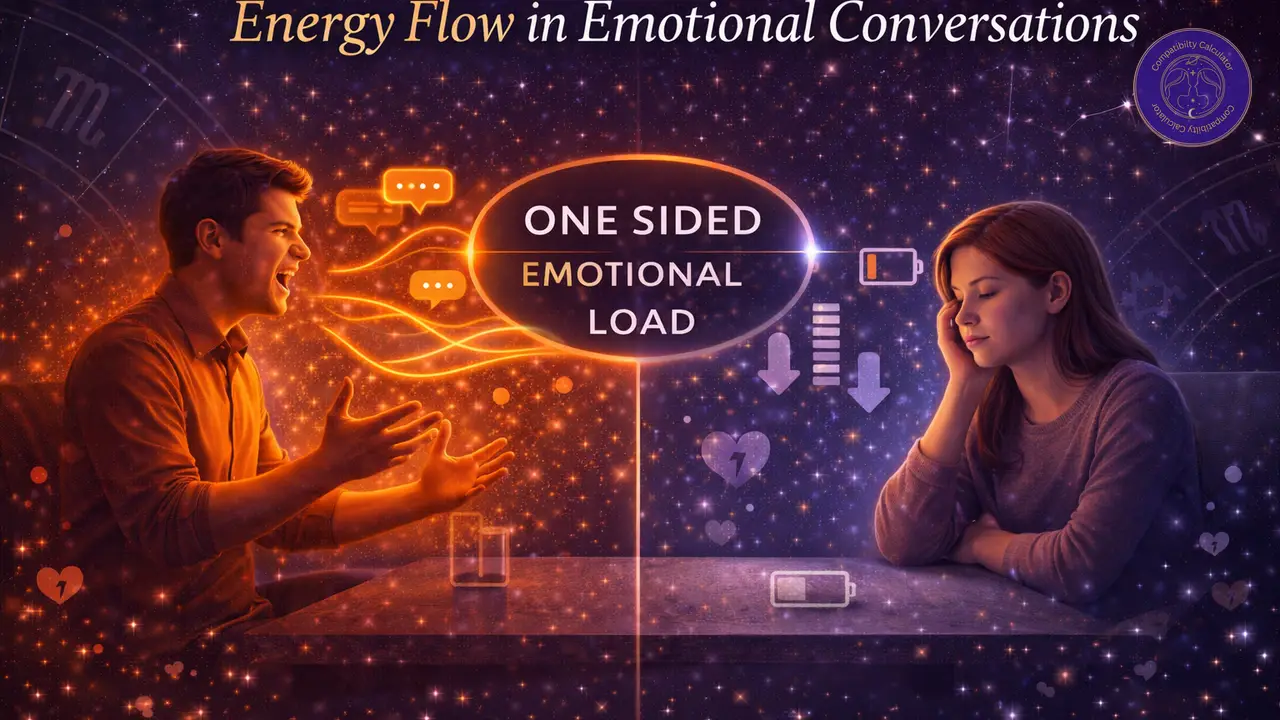
Emotional imbalance in conversation dynamics through overexplaining, shutdown, pressure, and uneven repair effort.
Conversation patterns often reveal whether one person is carrying too much emotional regulation alone.

Drain begins when energy flows mostly in one direction, and recovery does not happen naturally.

Why the Drain Keeps Repeating

This strain rarely happens by accident, because it usually grows from repeated imbalance in responsibility. One partner begins to regulate not only their own reactions but also the reactions of the other person, and over time, this extra weight becomes exhausting.

In many heavy relationships, one person calms arguments while the other escalates them, and one person adjusts tone while the other continues reacting without reflection. This pattern creates pressure, since stability depends mostly on one side.

Patterns That Create Continuous Exhaustion

Exhaustion grows when the same habits repeat without shared correction.

  • One partner repeatedly demands reassurance even after receiving it, so the reassurance never feels enough.
  • One partner reacts unpredictably to small changes, and the other partner stays alert to avoid triggering upset.
  • One partner uses silence after conflict as control, due to which the tension remains unresolved.
  • One partner shifts blame during disagreement, and the other partner ends up apologizing to restore peace.

These patterns do not need to be extreme to become draining, because repetition itself wears down energy.

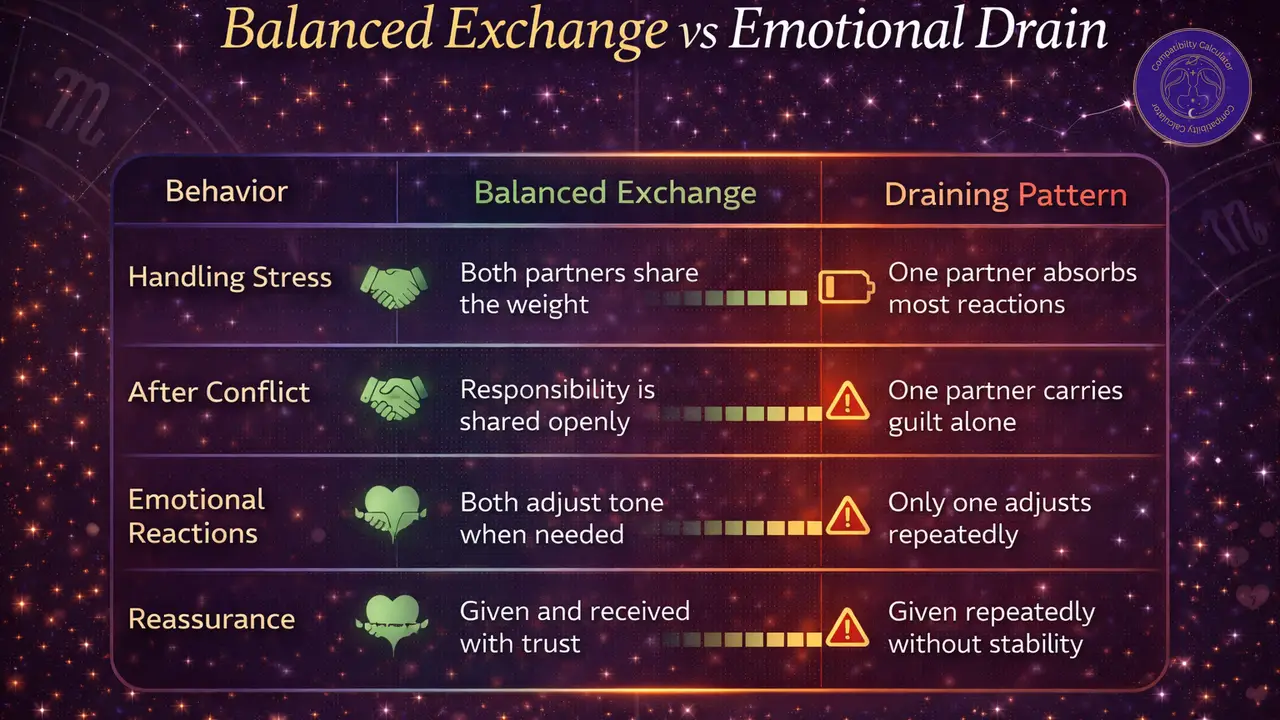
Balanced Exchange vs One Person Regulating

BehaviorBalanced PatternDraining Pattern
Handling stressBoth partners share the weightOne partner absorbs most reactions
After conflictResponsibility is shared openlyOne partner carries guilt alone
ReactionsBoth adjust tone when neededOnly one adjusts repeatedly
ReassuranceGiven and received with trustGiven repeatedly without stability

The table shows that pressure increases when a change happens mostly on one side instead of both.

Saturn and Burden

Saturn represents responsibility and endurance, yet in a draining bond, that sense of duty can slowly start to feel like a weight instead of stability. When one partner keeps fixing arguments, restarting conversations, and watching their tone carefully while the other reacts freely or avoids admitting mistakes, the steady effort stops feeling mature and starts feeling lonely.

Healthy Saturn energy feels shared because both people carry the difficult parts together, while unhealthy Saturn energy feels heavy because only one person keeps holding the structure in place.

When Tiredness Does Not Go Away

Every relationship feels heavy during stressful seasons, yet this condition becomes serious when exhaustion stays even during calm weeks. You may notice that nothing dramatic happened, but you still feel relief when you are alone, and that relief begins to say something important.

Temporary stress usually fades after rest or honest discussion, while deeper incompatibility keeps the body tense even when no argument is happening. If you constantly prepare yourself before bringing up small concerns, then safety may already be reduced.

Before deciding that a draining bond is only about incompatibility, it helps to look at emotional safety and trust in astrology compatibility. Some relationships feel exhausting because safety is missing, while others feel heavy because both people are reacting from old patterns.

A second layer is the difference between emotional need and attraction, which is why emotional vs physical compatibility is worth reading alongside this topic. If you want a broader reading, the compatibility calculator tool and the guide to astrology compatibility calculator accuracy can help you read the result with more care.

Signs the Relationship Can Recover

Some draining phases improve when both partners recognize the imbalance and adjust behavior with real effort.

  • Both partners can talk openly about feeling exhausted without turning the conversation into blame.
  • Boundaries start to be respected, so one person is not carrying every difficult feeling alone.
  • Responsibility becomes more shared, and repair no longer depends on one person starting it.
  • Recovery time shortens after conflict, and tension does not stretch for days.

When these shifts appear consistently, energy slowly returns because effort begins to move in both directions.

Signs the Drain Is Structural

Sometimes the exhaustion feels woven into the bond itself rather than into one stressful phase.

  • You feel smaller over time instead of supported in who you are becoming.
  • You hesitate before speaking honestly because past reactions made you cautious.
  • Apologies happen, yet behavior stays mostly the same.
  • Calm periods feel fragile, as if one small issue could restart the cycle.

These patterns suggest that the strain is not only about stress, since it may be connected to a fundamental mismatch.

Temporary Stress vs Chronic Drain

AreaTemporary StressChronic Drain
After conflictEnergy returns after discussionEnergy stays low even after resolution
Personal growthBoth feel supportedOne feels restricted or criticized
CommunicationDifficult but possibleAvoided or risky
Emotional loadShared during hard timesCarried mostly by one partner

The table shows that chronic strain is less about how often conflict happens and more about how long exhaustion lasts afterward.

Sun Identity and Misalignment

The Sun represents identity and direction, and fatigue increases when one partner feels that their core self is repeatedly questioned or minimized. When identity feels criticized during arguments, even small disagreements start to feel threatening, because the conflict touches something deeper than the topic itself.

Compatibility feels stronger when identity is respected, even during tension, since respect protects energy instead of draining it.

Compatibility Scorecard

Balanced exchange versus emotional drain in relationships through repair effort, reciprocity, and emotional load.
A relationship feels healthier when emotional effort, repair, and recovery move in both directions.

Use this reflection honestly by thinking about repeated experience and not just good days.

  • Energy balance between both partners
  • Conflict recovery speed
  • Shared responsibility during tension
  • Support for personal direction

Lower scores in several areas usually explain why tiredness keeps returning.

Reflection Section

Ask yourself these questions without rushing the answers.

  • Do I feel lighter or heavier after most serious conversations
  • Do I feel safe bringing up concerns without preparing for backlash
  • Has exhaustion reduced over time or increased quietly
  • Do both of us adjust our behavior when patterns repeat

Your answers usually tell you more than external advice.

Frequently Asked Questions

Is a drain always a sign of incompatibility?

Not always, because stress from work or family can temporarily increase pressure, yet persistent exhaustion that does not improve may indicate an imbalance.

Can this condition be reduced with maturity?

It can be reduced when both partners accept responsibility and change repeated behavior, since maturity without behavioral change does not restore energy.

Does astrology show draining pairings?

Astrology can show differences in Moon reactions or Saturn burdens, yet real strain depends on how those differences are handled in daily life.

When is exhaustion a warning sign?

Exhaustion becomes a warning sign when relief comes only from distance and not from repair, and when honest conversation feels more frightening than silence.

Final Checklist

Review these four indicators of relational health carefully.

  • We both carry weight during hard periods.
  • We see a visible change after repeated discussions.
  • We respect each other’s identity even when upset.
  • We feel restored rather than depleted after repair.

This pattern becomes manageable when responsibility is shared and identity is respected, yet it becomes harmful when exhaustion turns into a normal state instead of a temporary phase.

About the Author

Photo of author
Anikesh Panda writes about zodiac compatibility with a focus on how people actually behave in relationships. His work comes from observing patterns in communication, emotional reactions, and how couples handle conflict over time. Through CompatibilityCalculator.net, he translates these patterns into practical compatibility insights meant for general understanding.
Compatibilty Calculator favicon

CompatibilityCalculator.net helps you understand how zodiac signs interact in real relationships. The insights come from years of studying astrology patterns and observing how different personalities connect.

Contact

contact@compatibilitycalculator.net

Address

Bhubaneswar, Pin: 751009

State and Country

Odisha, India