How Attachment Actually Shows in Real Behavior
Attachment is visible through reaction rather than through labels, because a person’s response to distance, silence, reassurance, and conflict reveals far more than any category name. In daily life, attachment appears in repeated moments such as waiting for a reply, interpreting tone in a message, reacting after disagreement, or deciding whether to reach out again.

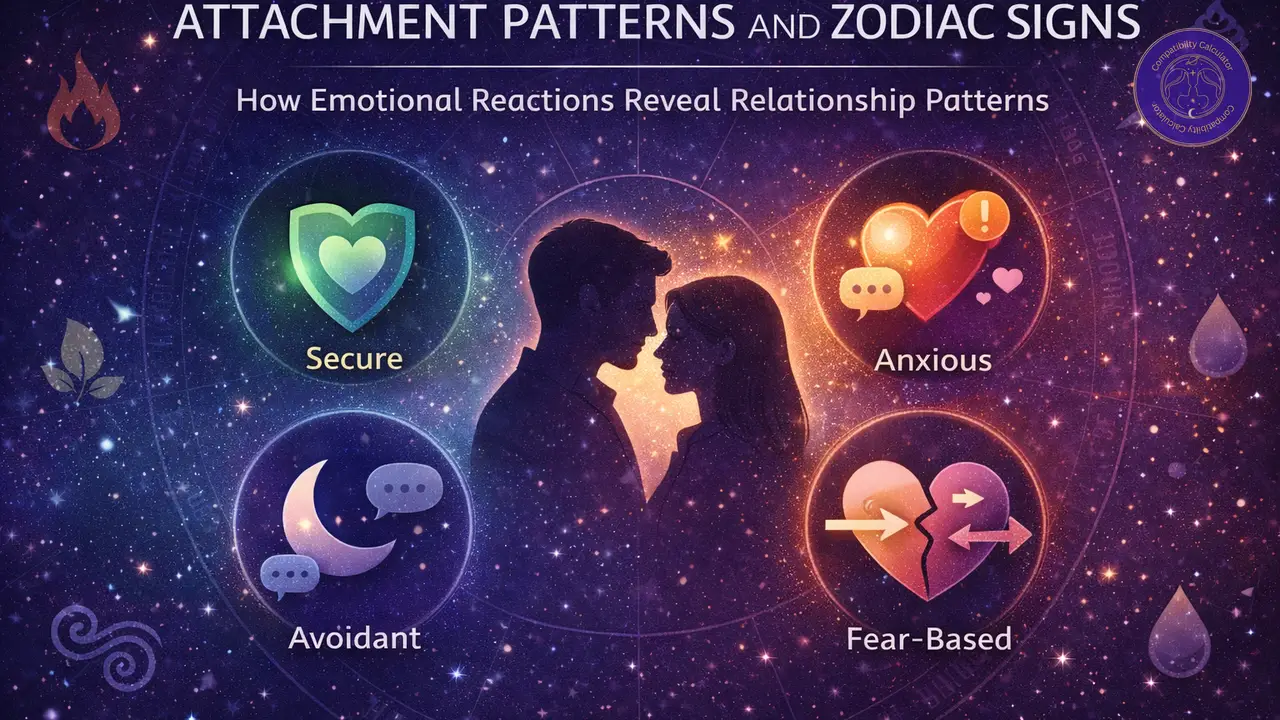
A secure pattern becomes visible when a person can tolerate temporary distance without assuming rejection, and when disappointment leads to calm discussion instead of emotional escalation. After conflict, a secure partner returns to the conversation with the intention to resolve the issue rather than to win the argument.
An anxious pattern becomes visible when silence feels threatening and when reassurance is needed repeatedly before calm returns. A delayed reply may create overthinking about tone or intention, and minor disagreements may grow larger if emotional confirmation does not arrive quickly.
An avoidant pattern becomes visible when emotional intensity feels uncomfortable and when withdrawal feels safer than continued discussion. During stress, an avoidant partner may reduce communication and focus on independence, even if connection remains important internally.
A fear based pattern becomes visible when closeness and distance alternate in cycles that feel confusing to both partners. Strong desire for reassurance may exist alongside fear of dependency, and emotional reaction may shift quickly from openness to retreat.
Observable Indicators in Daily Interaction
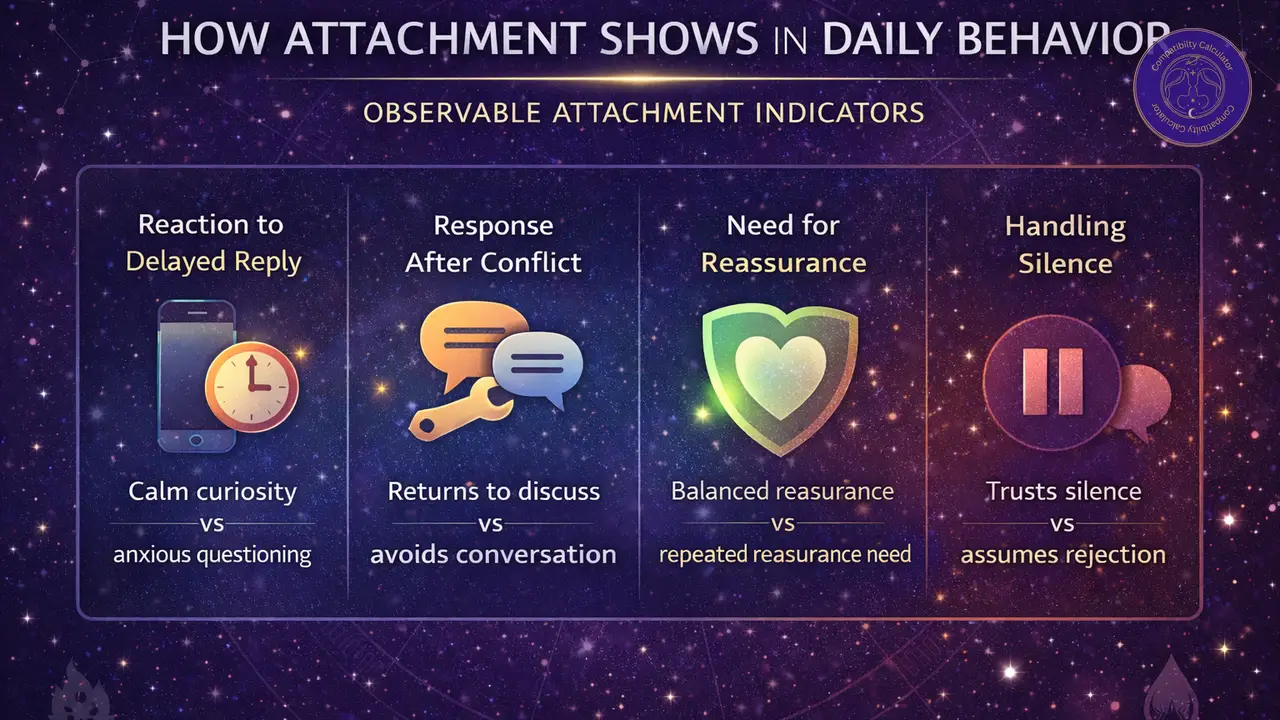
Attachment patterns can be identified through practical behaviors that repeat across situations rather than through isolated moments. The frequency of checking a phone, the interpretation of delayed communication, the tone used during disagreement, and the speed at which calm returns after conflict all provide measurable clues.
When a partner reacts to a 2 hours delay with calm curiosity instead of accusation, security is likely present. When a similar delay creates anxiety and repeated questioning, insecurity may be influencing the reaction. When distance results in silence without explanation, avoidance may be guiding behavior.
- Response to delayed communication reveals comfort with uncertainty.
- Reaction after disagreement shows emotional regulation level.
- Need for reassurance indicates attachment sensitivity.
- Handling of silence reflects trust and stability.
Attachment Identification Table
| Pattern | Reaction to Silence | Reaction After Conflict | Reassurance Need |
|---|---|---|---|
| Secure | Waits without panic | Returns to discuss | Moderate |
| Anxious | Assumes distance | Seeks immediate response | High |
| Avoidant | Withdraws quietly | Avoids continued talk | Low |
| Fear based | Mixed response | Alternates between pursuit and retreat | Fluctuating |
At this stage, attachment should be understood as a behavioral pattern that repeats across relationships rather than as a fixed personality trait. Observation of consistent reaction to distance, reassurance, and conflict gives clearer insight than abstract description alone.

How Zodiac Elements Influence Attachment Expression
Zodiac signs do not create attachment style, yet elemental temperament influences how an existing attachment pattern is expressed during closeness, stress, emotional uncertainty, and conflict. The element modifies tone and speed of reaction as well as preferred repair method and emotional expression without replacing the core attachment tendency.
Fire Signs and Attachment Expression
Fire signs express attachment through direct reaction and visible emotion, and insecurity may appear quickly when pride feels challenged or when attention decreases unexpectedly. When a Fire individual experiences distance, response may become louder or more confrontational instead of quiet withdrawal.
In secure form, Fire energy addresses concern immediately and seeks resolution without lingering resentment. In an insecure form, Fire energy may escalate conflict to regain reassurance.
- Quick confrontation during insecurity reveals active attachment.
- Strong pursuit appears when the connection feels threatened.
- Pride sensitivity may intensify a reaction during disagreement.
- Immediate discussion restores clarity more effectively than silence.
Earth Signs and Attachment Expression
Earth signs express attachment through consistency in behavior and through reliability in daily interaction, and bonding may develop gradually rather than intensely at first. When insecurity appears, reaction may become quieter instead of louder.
In secure form, Earth energy maintains dependable action even during conflict. In an insecure form, Earth energy may withdraw emotionally while continuing practical responsibility.
- Slow bonding reflects caution rather than lack of interest.
- Reliable behavior signals commitment.
- Silence during stress may indicate processing rather than rejection.
- Reassurance through action may feel stronger than a verbal promise.
Air Signs and Attachment Expression
Air signs express attachment through conversation and mental connection, and emotional processing may occur through explanation rather than display. During insecurity, an Air individual may seek clarity through dialogue instead of emotional intensity.
In a secure form, Air energy communicates perspective while remaining receptive. In an insecure form, Air energy may rationalize hurt instead of acknowledging vulnerability.
- Extended discussion reflects a desire for understanding.
- Intellectual explanation may replace emotional expression.
- Detachment during argument may signal overload rather than indifference.
- Calm conversation supports repair.
Water Signs and Attachment Expression
Water signs express attachment through emotional depth and sensitivity to tone, and insecurity may appear through withdrawal or visible hurt rather than direct confrontation. Emotional memory may influence reaction long after the event has passed.
In a secure form, Water energy communicates feeling openly without accusation. In an insecure form, Water energy may retreat while expecting reassurance to arrive.
- Sensitivity to tone shapes emotional reaction.
- Withdrawal may indicate hurt rather than rejection.
- Strong bonding creates intense loyalty.
- Reassurance restores comfort more effectively than logic.
Element Attachment Influence Table
| Element | Insecure Expression | Secure Expression | Repair Preference |
|---|---|---|---|
| Fire | Escalates argument | Addresses the issue directly | Immediate discussion |
| Earth | Withdraws quietly | Maintains reliable behavior | Consistent action |
| Air | Rationalizes emotion | Communicates perspective | Calm dialogue |
| Water | Retreats emotionally | Shares feelings openly | Emotional reassurance |
At this stage, the element should be viewed as a modifier of expression rather than as the origin of the attachment pattern. When you look at attachment style and zodiac temperament together, it becomes easier to understand why two people with similar insecurity still react in different ways.
Attachment patterns become easier to understand when they are connected to emotional safety instead of treated like fixed labels. The guide to emotional safety and trust in astrology compatibility shows how daily reassurance, tone, and repair shape whether a bond feels steady.
Attachment Pattern Combinations in Relationships
Attachment compatibility becomes clearer when two patterns interact repeatedly over time, because each reaction either stabilizes the other person or increases insecurity. A relationship does not struggle only because one partner is anxious or avoidant, but because the interaction between both patterns creates a cycle.
Anxious and Avoidant Dynamic
An anxious partner usually moves closer when distance appears, while an avoidant partner usually creates space when emotional pressure increases. This opposite reaction can create a pursuit and withdrawal cycle that feels intense for both people.
When reassurance is requested repeatedly and space is requested repeatedly in return, frustration increases, and misunderstanding grows. Stability improves only when pacing becomes intentional, and reassurance as well as independence are discussed clearly.
- Pursuit increases when silence feels threatening.
- Withdrawal increases when pressure feels heavy.
- Repeated cycles create exhaustion.
- Structured reassurance and agreed space reduce escalation.
Secure with Insecure Patterns
A secure partner can provide stability when the other partner reacts with anxiety or avoidance, yet emotional fatigue may develop if responsibility for repair becomes one-sided. Support feels healthy when boundaries remain clear, and effort is visible from both sides.
If the secure partner consistently explains tone, offers reassurance, and maintains calm responses, insecurity may reduce gradually. If the imbalance continues without adjustment, resentment may appear even in a stable individual.
- Calm explanation reduces anxious reactions.
- Predictable behavior reduces doubt.
- Clear boundaries prevent emotional overload.
- Mutual effort protects long-term stability.
Same Pattern Relationships
When two anxious partners connect, reassurance demand may become high on both sides, and conflict may escalate quickly. When two avoidant partners connect, emotional expression may remain low, and distance may grow quietly.
Two secure partners usually repair conflicts efficiently and maintain steady communication. Two fear-based partners may alternate between strong closeness and sudden distance, which can create emotional instability if awareness remains low.
- Two anxious partners amplify emotional intensity.
- Two avoidant partners minimize emotional discussion.
- Two secure partners maintain consistent repair.
- Two fearing partners experience unstable closeness.
Attachment Interaction Table
| Combination | Common Cycle | Main Risk | Stabilizing Action |
|---|---|---|---|
| Anxious + Avoidant | Pursuit and withdrawal | Escalation | Clear pacing agreement |
| Secure + Anxious | Reassurance demand | Emotional fatigue | Boundary clarity |
| Secure + Avoidant | Distance tension | Emotional gap | Direct communication |
| Same pattern pairing | Reinforced behavior | Pattern repetition | Self-awareness and adjustment |

Some pairs still feel physically drawn to each other even when their attachment needs clash. That is why emotional vs physical compatibility is a useful next read, especially when attraction is present but calm connection feels inconsistent.
For a broader match reading, the compatibility calculator tool can show the main pattern quickly. The guide on astrology compatibility calculator accuracy then helps you read that score without treating it as a final judgment.
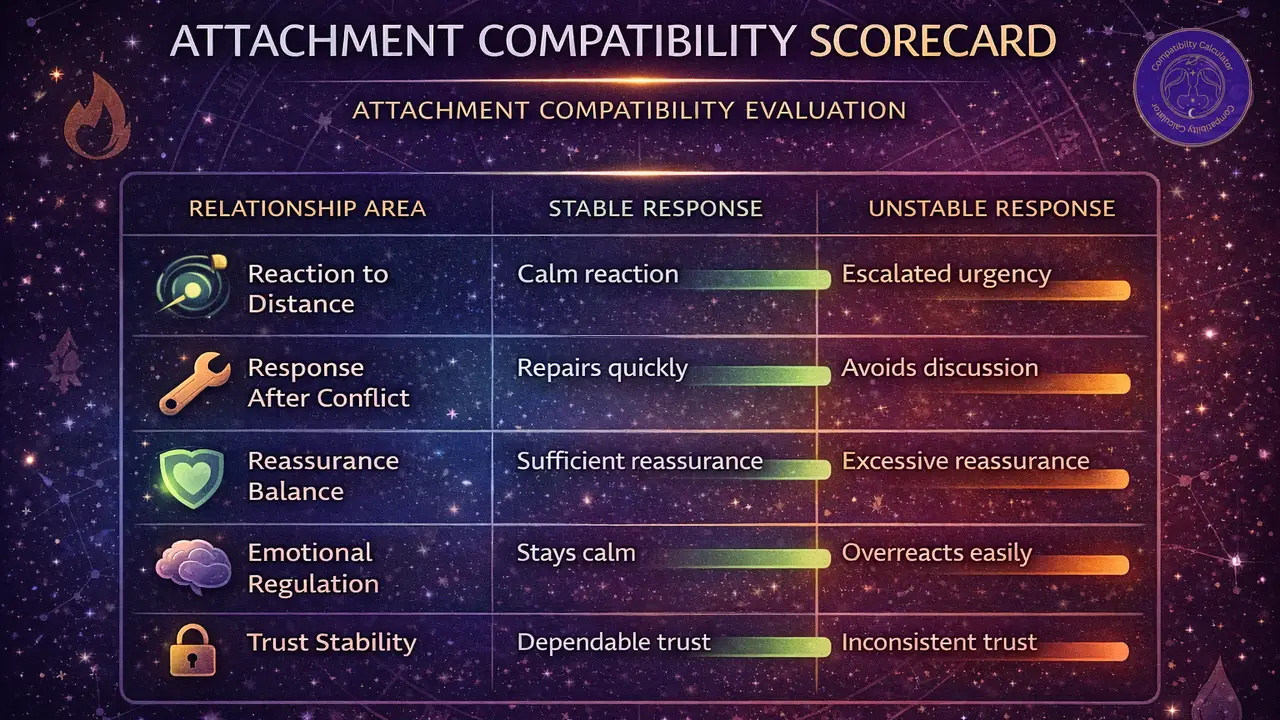
Attachment Compatibility Scorecard
| Area | Evaluation Focus |
|---|---|
| Reaction to distance | Calm or escalated |
| Response after conflict | Repair speed |
| Reassurance balance | Excessive or sufficient |
| Emotional regulation | Stable or reactive |
| Trust stability | Growing or fluctuating |
| Adjustment ability | Present or resistant |
Reflection
A clear understanding of attachment requires honest observation of repeated reactions rather than single events. When distance appears, note whether calm remains present or whether urgency increases immediately.
When conflict ends, observe whether repair happens through discussion and reassurance or whether silence continues without resolution. These patterns reveal compatibility more accurately than attraction alone.