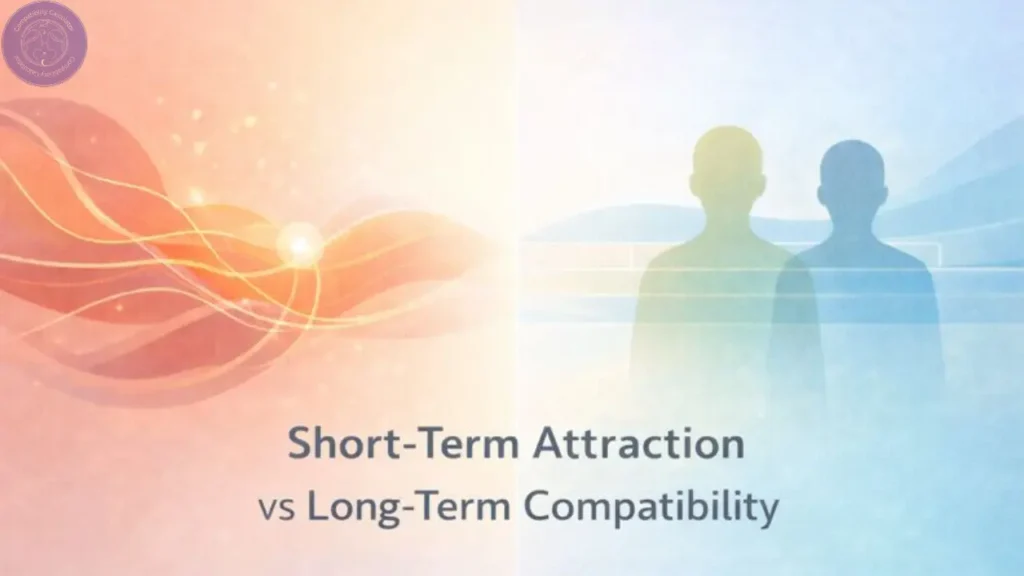
Short-Term Attraction vs Long-Term Relationship Compatibility

Attraction has a way of arriving loudly. It enters the body before it settles in the heart, and it feels strong because instinct, desire, and curiosity awaken together.

Many people mistake this intensity for destiny, yet astrology never dismisses attraction nor glorifies it blindly. Astrology observes attraction as a phase, a signal, and sometimes a lesson. What you need to understand is this. Not every powerful beginning is designed for a long journey, and charts quietly reveal that difference long before time does.

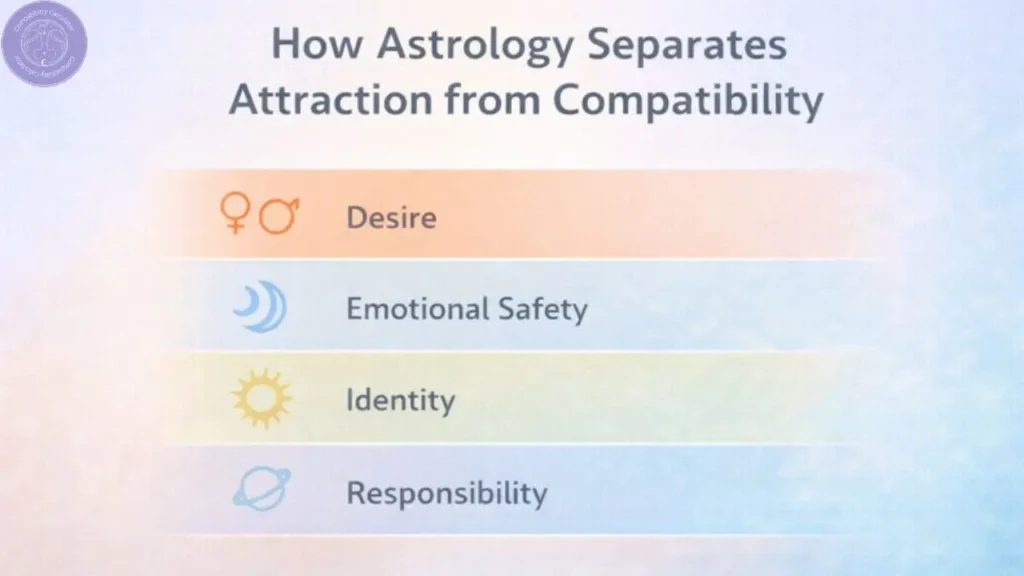
How Astrology Separates Attraction from Compatibility

Astrology does not treat love as a single force. Desire, bonding, safety, and endurance live in different planetary layers. Venus and Mars speak about attraction and pursuit.

The Moon speaks about emotional nourishment and safety. The Sun reflects shared direction and purpose. Saturn speaks about responsibility and time. Confusion appears when these layers are blended into one expectation. As we know, when attraction is mistaken for compatibility, emotional disappointment follows because speed replaces understanding.

Short-Term Attraction Through an Astrological Lens

Planetary Combinations That Create Instant Pull

Venus and Mars interactions create chemistry that feels immediate and physical. The Moon adds emotional curiosity, while the rising sign shapes magnetism and first impressions.

Planetary Combinations That Create Instant Pull

These planets move quickly in emotional response, due to which the body reacts before emotional grounding forms. That’s why attraction feels instinctive rather than chosen. Astrology shows that an instant pull happens when desire awakens faster than emotional safety.

Fire and Air Energy in Early Relationships

Fire and Air signs create movement, excitement, and mental stimulation. Conversation flows easily, attraction escalates quickly, and connection feels alive.

The thing is that speed amplifies emotion, but it does not always build roots. Fire burns brightly, and Air spreads the flame. Without grounding elements, intensity grows fast and fades just as quickly. That’s why early excitement can feel profound even when stability is missing.

The Role of Transits and Timing

Attraction does not always arrive because of permanent compatibility. Sometimes it arrives because timing opens emotional doors. Transits activate dormant parts of the chart, awakening desire, confidence, or curiosity.

These connections often appear during personal shifts, identity changes, or emotional awakening phases. Astrology views these meetings as signals rather than promises. That’s why some connections feel meaningful even when they are brief.

Note: If you want to understand how compatibility works beyond attraction, checking real chart-based patterns can bring more clarity. A detailed breakdown of emotional alignment, stability, and long-term relationship indicators is available through this relationship compatibility calculator, which helps you see how two charts interact in practical day-to-day life rather than just surface chemistry.

Karmic Sparks Versus Lasting Karmic Bonds

A karmic spark activates memory and emotion. A karmic bond builds responsibility and continuity. Both serve different purposes. Karmic sparks arrive to awaken awareness, while karmic bonds stay to teach patience and growth.

Astrology identifies lesson-based connections through patterns that repeat quickly without stability. These connections feel familiar but unstable, due to which intensity replaces security.

Why Short-Term Attraction Feels Bigger Than Its Foundation

Attraction intensifies when novelty meets unmet emotional needs. Projection replaces understanding in early stages. Emotional hunger connects to excitement, making the bond feel stronger than it can realistically hold.

Astrology measures readiness through the Moon and Saturn rather than Venus and Mars alone. This is why attraction may feel intense while stability remains limited.

Why Short-Term Attraction Feels Bigger Than Its Foundation

Emotional Intensity vs Emotional Capacity

Intensity excites the nervous system. Capacity sustains it. Emotional capacity reflects how much closeness, responsibility, and consistency a person can hold.

When intensity exceeds capacity, burnout appears. Astrology observes this imbalance through unstable Moon patterns, lack of grounding aspects, and excessive stimulation. Above all, sustainability depends on emotional regulation, not emotional fire.

Common Astrological Patterns in Short-Lived Relationships

Uranus’s dominance brings excitement and unpredictability that keeps energy high but rarely stable, while Neptune’s illusion blurs reality and encourages fantasy to replace clarity.

Mars dominance without grounding increases conflict and impatience, and the absence of Saturn removes structure, accountability, and the ability to slow down when tension rises. It is not like these patterns mean failure, because they teach awareness, emotional boundaries, and self-understanding. Astrology views these experiences as preparation rather than mistakes, shaping discernment before lasting bonds form.

Why Long-Term Compatibility Feels Quieter but More Stable

Lasting bonds rarely announce themselves loudly, because they grow through rhythm, trust, and shared reality rather than constant stimulation. Astrology observes that calm does not signal the absence of feeling but reflects nervous system safety that develops over time.

Why Long-Term Compatibility Feels Quieter but More Stable

The main thing is this. Relationships that last feel steady because emotional energy circulates instead of burning out, and love continues not through excitement alone but through the repeated ability to return to balance again and again.

Core Chart Foundations for Long-Term Relationships

Sun, Moo,n and Rising Sign Harmony

The Sun shows direction and purpose. The Moon reflects emotional needs and daily care. The rising sign shapes how life is approached together. When these three communicate smoothly between charts, life flows with less resistance.

Disagreements still appear, yet repair happens naturally. As we already saw, compatibility here supports shared routines, mutual respect, and emotional ease.

Saturn as the Pillar of Commitment

Saturn carries time, responsibility, and accountability. Many people resist Saturn because it feels serious, yet the thing is very clear here. Saturn decides who remains present when life demands effort and consistency.

Supportive Saturn connections create patience, loyalty, and a willingness to grow together through time. Love that lasts learns how to work, not just how to feel.

Elemental Balance Over Time

Earth and Water elements bring grounding and emotional depth. Earth steadies daily life, while Water softens emotional edges. Fire and Air inspire movement and ideas. Long-term bonds thrive when these elements balance each other. Above all, steadiness allows affection to strengthen without exhaustion.

House Overlays and Shared Life Structures

House placements reveal where lives intersect. Planets falling into supportive houses show shared values, routines, and responsibilities. When personal planets activate domestic or partnership houses, daily life feels shared rather than negotiated. Astrology reads these overlays as indicators of how easily two lives merge.

Emotional Compatibility as the Backbone of Longevity

Emotional safety predicts endurance more accurately than attraction. Moon sign harmony shows how comfort, care, and reassurance flow between partners.

Emotional nourishment allows vulnerability without fear. Without this, intensity turns into strain. What you need to understand is this. Emotional compatibility builds the foundation that attraction alone cannot sustain.

Synastry Patterns That Support Enduring Bonds

Supportive Sun Moon aspects create emotional understanding and mutual recognition, while Saturn connections establish commitment through responsibility and shared effort over time.

How Astrology Seprates Attraction From Compatibility

Venus Moon harmony nurtures affection and care in a way that feels natural rather than forced, and stable house overlays reinforce shared direction in daily life. These patterns work quietly, yet their influence remains visible across time because they do not demand constant attention, which is why they endure.

When Short-Term Attraction Evolves Into Long-Term Compatibility

Growth becomes possible when emotional maturity develops, and responsibility is welcomed, because Saturn activation, shared values, and timing alignment begin to work together.

Sometimes attraction arrives early, while compatibility follows later through lived experience and patience. Astrology views this transition as a test of willingness to grow together rather than an urge to force outcomes before they are ready.

When It Does Not and Why Acceptance Matters

Some dynamics resist stability despite sincere effort, and charts reveal when instability dominates or when grounding remains absent across time. Acceptance prevents emotional depletion because wisdom respects limits rather than fighting them endlessly, and astrology teaches that release can be an act of self-respect rather than a sign of failure.

The Astrologer’s Guidance on Choosing Wisely

Attraction speaks loudly, while compatibility speaks softly, and long-term peace emerges only when both are understood without confusion. You already know this at some level, because relationships that endure continue to feel supportive even during difficult times rather than draining energy through constant urgency. Astrology encourages observation, patience, and honesty, guiding attention away from haste and toward what remains steady with time.

FAQs

Why does long-term love feel calmer than attraction?

Long-term love feels calmer because emotional safety replaces urgency. When two people feel secure with each other, the nervous system relaxes. Astrology shows that this calm comes from Moon harmony and stable rhythms, not from a lack of feeling. Over time, love shifts from excitement to presence, which feels quieter but steadier.

Is Saturn necessary for lasting relationships?

Saturn plays a key role in relationships that last. It brings responsibility, patience, and willingness to stay present during difficulty. Astrology views Saturn as the force that tests commitment through time. When Saturn is supportive, bonds mature instead of breaking under pressure.

Can attraction return in long-term bonds?

Attraction does not disappear in long-term bonds. It changes shape. With trust and emotional safety, attraction becomes consistent rather than urgent. Astrology shows that attraction increases when partners feel understood and supported, not when intensity is pushed.

Does compatibility guarantee happiness?

Compatibility supports stability, understanding, and emotional balance. It creates a strong base, but happiness still grows through awareness, effort, and shared growth. Astrology shows potential, not outcomes. How that potential is lived depends on maturity and choice over time.

Compatibilty Calculator favicon

CompatibilityCalculator.net helps you understand how zodiac signs interact in real relationships. The insights come from years of studying astrology patterns and observing how different personalities connect.

Contact

contact@compatibilitycalculator.net

Address

Bhubaneswar, Pin: 751009

State and Country

Odisha, India