Career and business compatibility in astrology begins with function rather than feeling. Professional relationships grow inside responsibility, pressure, and visible outcomes, which makes their astrological reading very different from emotional or family analysis.
The thing is that work partnerships survive on role clarity and shared direction, not on affection or personal comfort.
Astrology treats professional bonds as systems. Ambition, authority, communication flow, and accountability shape results over time.
When these elements align, progress feels steady. When they clash, friction appears even between people who respect each other. The chart explains why this happens and where adjustment becomes possible.
What Career and Business Compatibility Really Means in Astrology
Compatibility Beyond Friendship or Trust
Professional compatibility does not depend on liking or personal loyalty. Astrology defines compatibility here as functional alignment, where the way decisions get made, the way responsibility is carried, and the pace at which actions move forward support each other without constant correction or confusion.
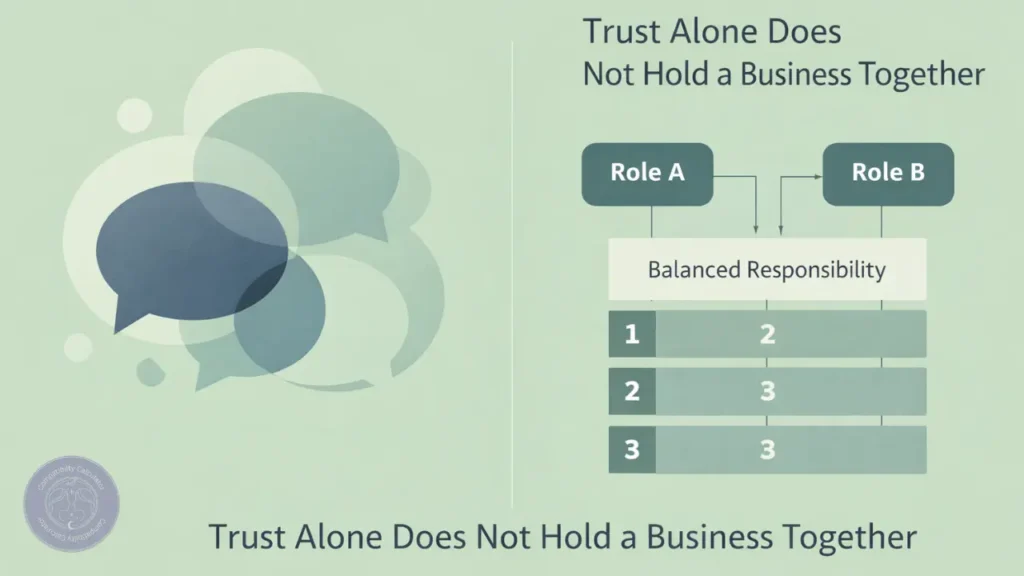
Trust matters, yet trust alone cannot hold a business together when direction remains unclear, and leadership roles stay undefined.
Shared purpose keeps partnerships stable. Charts often show that people who trust each other deeply still struggle professionally because ambition levels or authority comfort differ. Astrology highlights these gaps early by examining how direction and responsibility interact.
Emotional Detachment Versus Emotional Intelligence
Professional settings require emotional regulation, not emotional distance. Emotional detachment creates coldness, while emotional intelligence creates stability. Astrology distinguishes these two clearly through planetary emphasis.
When emotional responses dominate decision-making, instability follows. When awareness guides response, pressure becomes manageable. The chart does not remove emotion from work. The chart shows where emotion needs containment so clarity can remain intact.
Key Areas Astrology Examines in Professional Compatibility
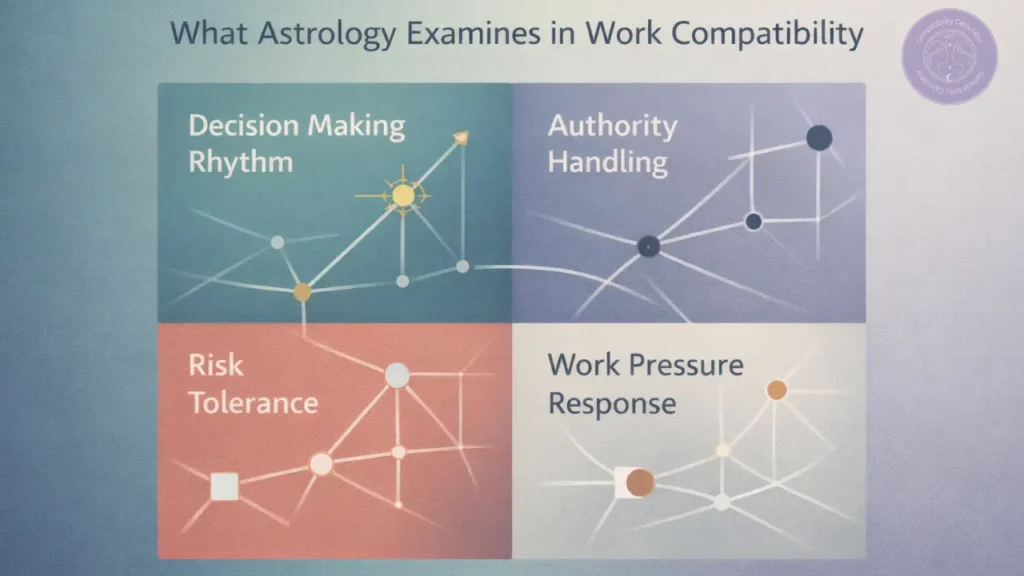
Career astrology focuses on functional questions rather than personal traits.
- Decision-making rhythm and timing comfort
- Authority sharing and leadership tolerance
- Risk handling and ambition intensity
- Daily work pace and pressure response
Each area connects to specific planetary and house patterns that reveal how work actually unfolds.
Astrology as a Professional Diagnostic Tool
Ethical Use of Astrology in Career Analysis
Astrology does not promise success or failure. Ethical practice explains tendencies and pressure points without creating fear. Professional charts describe how effort meets structure, not how fate overrides choice.
Responsible astrologers avoid prediction-based certainty. Charts show how energy moves, while outcome remains shaped by awareness, discipline, and timing.
Common Misconceptions About Career Compatibility
Several assumptions weaken professional astrology when they remain unexamined over time. These assumptions simplify complex working relationships and reduce astrology to surface-level judgment instead of practical understanding. When left unchallenged, they create unrealistic expectations and cause people to misread both the chart and the partnership itself.
- The belief that identical zodiac signs guarantee success ignores role and authority dynamics.
- The belief that friendship replaces professional structure overlooks accountability needs.
- The belief that difficult aspects signal inevitable failure misunderstands growth cycles.
Astrology clarifies challenges so they can be managed, not avoided.
Core Astrological Anchors in Career and Business Compatibility
Why Saturn, Sun, and Mercury Lead
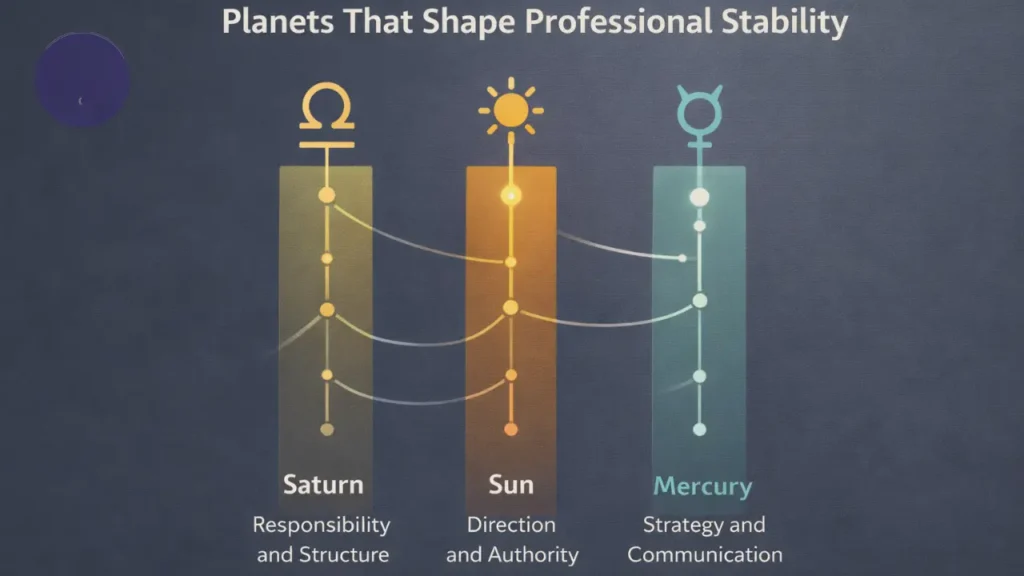
Career compatibility rests on structure, direction, and coordination. These functions belong to Saturn, Sun, and Mercury.
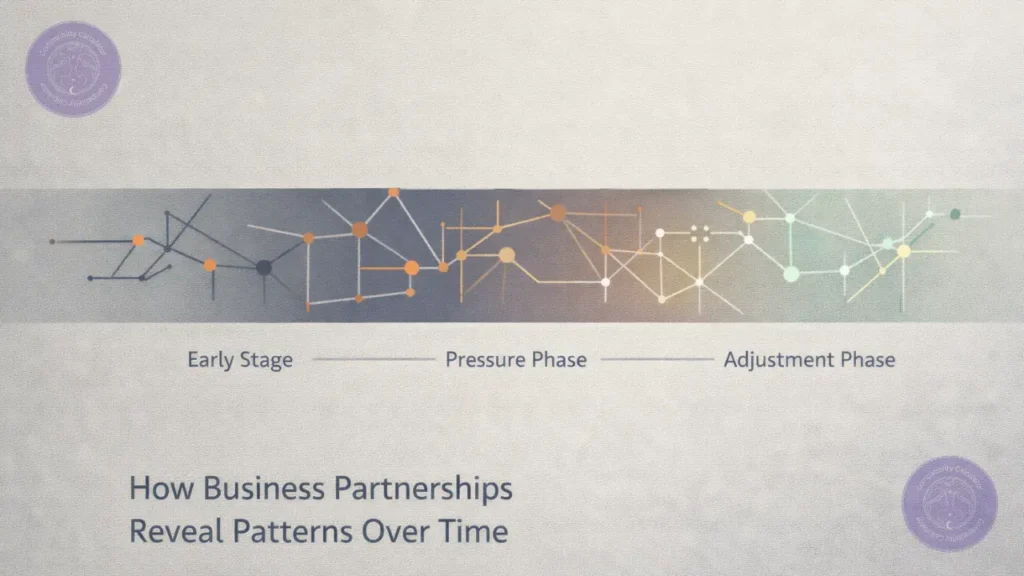
Saturn reflects responsibility, boundaries, and long-term endurance. This planet shows how commitment holds under pressure.
The Sun reflects authority, leadership identity, and purpose. This planet shows who leads and how direction forms. Mercury reflects strategy, communication flow, and operational clarity. This planet shows how plans turn into action.
When these planets cooperate, professional relationships gain stability. When tension exists, conflict usually centers around control, confusion, or delayed action.
| Planet | Professional Function | Core Theme |
|---|---|---|
| Saturn | Structure and accountability | Responsibility and longevity |
| Sun | Direction and authority | Leadership and purpose |
| Mercury | Strategy and exchange | Communication and planning |
At this stage, many professionals prefer to review chart interaction visually before forming conclusions. A compatibility calculator supports this process by mapping authority patterns, communication flow, and responsibility indicators across charts. The calculator works best as a reference tool, helping highlight areas that deserve closer astrological interpretation.
Houses That Define Career and Business Alignment
Why Houses Matter More Than Signs in Career Astrology
Zodiac signs describe approach, while houses describe environment. Career success unfolds inside systems, not personalities. Houses reveal where effort is placed, where authority operates, and where pressure accumulates.
Planetary overlays between charts activate these houses daily. Over time, these activations shape habits that define success or strain.
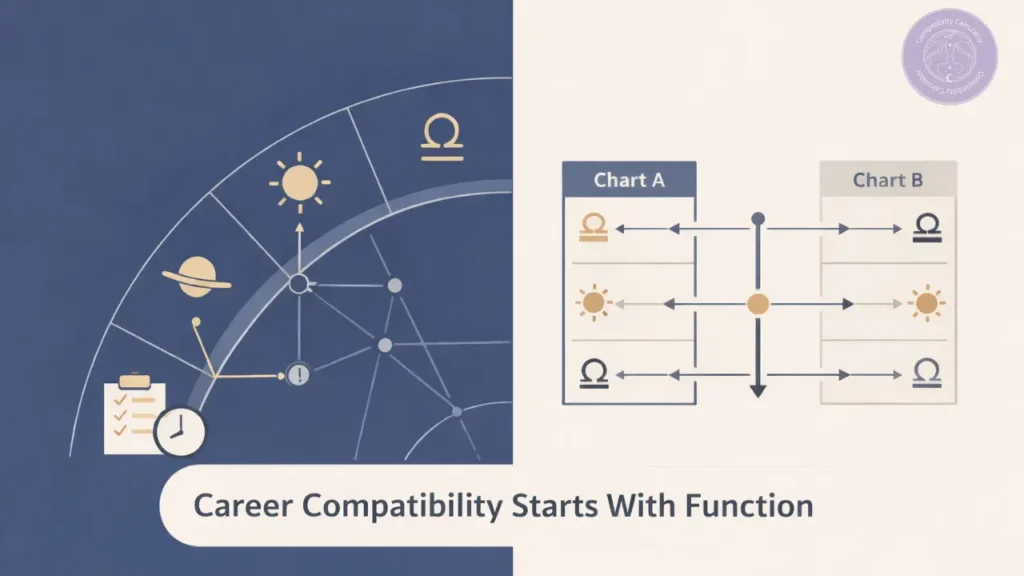
The Tenth House
The tenth house represents career direction, public responsibility, and authority visibility. Leadership roles, reputation, and accountability appear here. Balance creates guidance and trust. Imbalance creates control struggles or avoidance of responsibility.
Professional conflict often traces back to misalignment in this house, where expectations exceed clarity.
The Sixth House
The sixth house reflects daily work rhythm, effort distribution, and stress management. Compatibility here determines how smoothly tasks move without burnout. Mismatched sixth house patterns create frustration even when goals align.
The Second and Eighth Houses
The second house reflects income values and material stability preferences. The eighth house reflects shared resources, investment risk, and financial control. Conflict around money usually reflects a value mismatch or a control imbalance rather than intent.
These houses explain why financial tension appears even when profits grow.
Transition Reflection
Structure creates stability before partnership interaction begins. Without clarity around responsibility, authority, and work rhythm, professional behavior feels personal and confusing. Once structure becomes visible, interaction patterns gain meaning. That understanding prepares the ground for deeper partnership dynamics in the next part.
Business Synastry
How Charts Interact in Professional Relationships
Business synastry reveals how people respond under pressure rather than how they connect emotionally. Professional relationships activate charts through deadlines, risk, and accountability, which expose patterns faster than comfort ever does. The thing is that repeated collaboration turns planetary contacts into habits, and those habits decide efficiency or conflict.
Unlike romantic bonds, business partnerships do not soften tension through emotion. Charts show that intention matters less than response style once pressure appears. Synastry in work settings highlights where coordination flows naturally and where friction repeats without awareness.
Business Partner Compatibility
Decision Making and Authority Sharing
Authority patterns appear through the Sun and Saturn interaction. A clear balance between leadership and responsibility creates momentum, while an imbalance creates a power struggle or hesitation. When one chart pushes direction, and the other resists authority, progress slows even when ideas remain strong.
Shared authority does not mean equal authority. Astrology shows when roles need definition so leadership feels functional rather than competitive.
Communication and Strategy Alignment
Mercury connections reveal how plans form and how disagreements get handled. Compatible Mercury patterns support discussion, revision, and awareness of timing. Difficult Mercury patterns create assumptions, delay, or misinterpretation during critical moments.
Strategic clarity depends on how information moves. When communication styles clash, effort increases while results decline.
Risk Taking and Growth Direction
Expansion tendencies appear through Jupiter’s influence, while action style appears through Mars. One partner may push growth aggressively, while the other prefers controlled expansion. Astrology explains this difference without labeling either approach as wrong.
Misalignment here creates tension during scaling phases. Awareness allows adjustment before conflict turns personal.
Employer and Employee Compatibility
Role Expectation and Accountability
Saturn overlays describe comfort with hierarchy and responsibility flow. Clear Saturn interaction supports respect and reliability. Strained Saturn interaction creates resistance, fear, or withdrawal from responsibility.
Professional harmony improves when expectations align with real capacity. Astrology shows where role definition needs adjustment so responsibility feels workable instead of overwhelming.
Work Pace and Stress Response
Sixth house interaction reveals how pressure gets handled daily. Some charts thrive under a steady routine, while others respond better to flexible pacing. Mismatch here leads to burnout or resentment over time.
Stress tolerance matters more than motivation in long-term work settings.
Team Dynamics and Collective Patterns
How Group Energy Shapes Outcomes
Team environments amplify dominant planetary themes. Strong Saturn presence supports discipline but may slow creativity. Strong Mercury presence supports ideas but may weaken execution.
Sustainable teamwork forms when effort and renewal stay in rhythm. Astrology helps explain why certain teams work hard but burn out over time, while others remain creative yet fail to maintain consistent output.
Repeating Patterns in Workplaces
In many workplaces, repetition reveals dynamics that never received proper resolution.
- Authority loops appear when leadership remains unclear.
- Communication breakdown cycles appear when information flow lacks structure.
- Responsibility overload appears when accountability is uneven.
Such patterns continue until a clear structure replaces assumption and guesswork.
Patterns That Decide Long-Term Success
Structured observation highlights three deciding factors.
- Saturn stability supports endurance and reliability.
- Mercury clarity supports coordination and adaptability.
- Sun alignment supports shared direction and confidence in leadership.
When these factors support each other, partnerships mature. When they clash, effort increases without proportional return.
Reflection
Career and business compatibility astrology does not remove the challenge. It explains where the challenge belongs. Professional success grows when systems are understood rather than personalized. The chart becomes a map that guides correction, not a verdict that predicts outcome.
Frequently Asked Questions
Can astrology really help in choosing a business partner?
Astrology explains how responsibility, communication, and authority operate between charts. This insight supports informed decisions by highlighting pressure points early. Final outcomes still depend on effort, ethics, and timing.
Do difficult aspects mean a partnership will fail?
From an astrological view, difficult aspects highlight lessons instead of predicting failure. Many stable partnerships grow through tension that builds discipline and maturity. Awareness shapes whether that tension becomes constructive or damaging.
Is friendship enough for business success?
Friendship supports trust, but professional alignment requires role clarity and shared direction. Astrology shows where emotional comfort conflicts with functional needs. Both layers need attention for stability.
How important is timing in career compatibility
In professional relationships, timing decides when pressure highlights specific patterns. Early difficulty does not always signal long-term instability, since maturity can change how challenges get handled. Astrology supports realistic expectations by showing when growth phases are still unfolding.