An astrology calculator may ask for a birth date, time and location because those details feed the chart method. They still belong to a real person, and the privacy question starts before anyone presses Calculate: what is requested, where is it processed, what is stored and what other services receive a request?
Why Birth Information Deserves Clear Privacy Language
A birth date by itself may seem ordinary. A date combined with time, location, name, cookies or an account can describe a much more identifiable profile. A thoughtful page therefore separates the astrology reason for requesting data from the technical questions about storage, analytics, logs and third-party services.
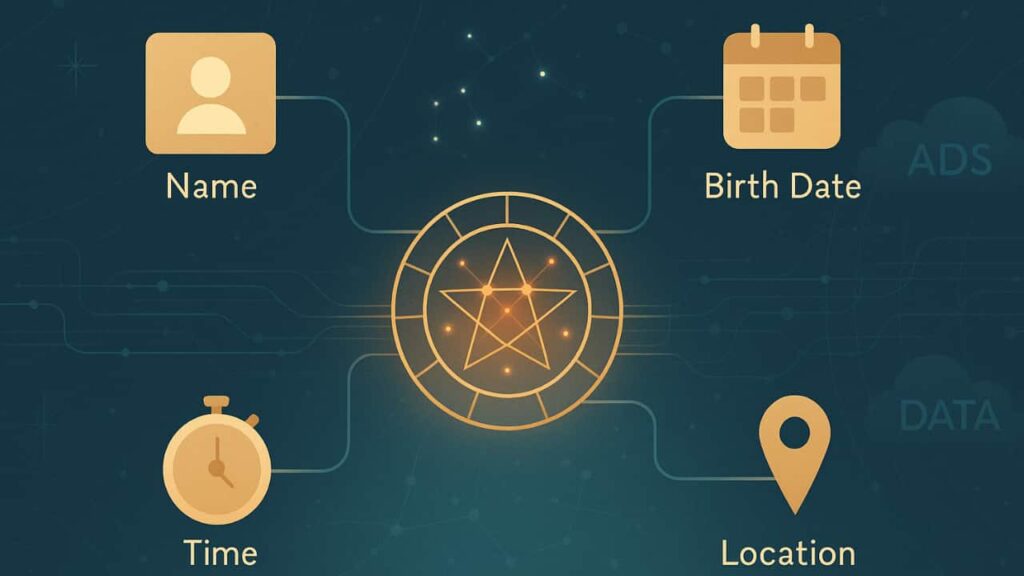
What Information Astrology Calculators May Ask For
- Birth date, which anchors the date-based part of a chart calculation.
- Birth time and location, which may affect time-sensitive chart positions.
- A second person’s details when the tool compares two people.
- Optional account, contact, cookie or analytics information that is separate from the astrology calculation itself.
What Readers Should Check Before Entering Birth Details
- Read the privacy notice and identify the site operator.
- Check whether the page distinguishes calculation data from account, cookie and analytics data.
- Look for retention, deletion, third-party service and contact information.
- Enter only the information needed for the mode you intend to use, and do not treat an astrology result as a reason to share someone else’s details without permission.
Browser Processing, Storage and Analytics Are Different Questions
A calculation that runs in the browser is one technical fact. It does not by itself answer whether the page makes network requests, uses analytics, sets cookies, stores server logs or loads third-party assets. A page may describe the calculation path while its privacy policy describes the wider website environment; both pieces deserve a read.
Why Absolute Privacy Claims Can Be Misleading
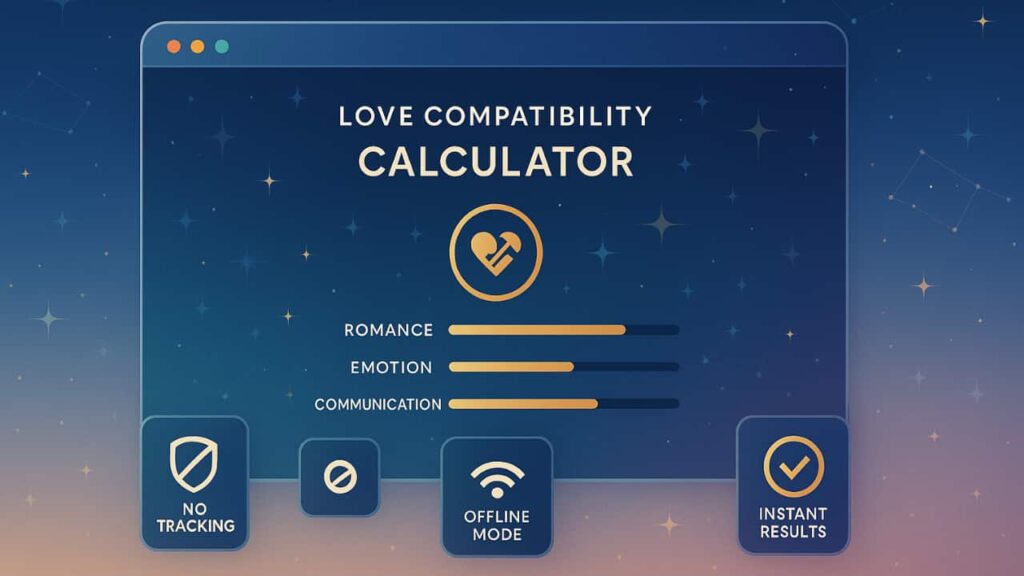
Phrases such as nothing leaves your device, no tracking and completely anonymous sound clear but can exceed the evidence available to a reader. A narrower statement is more useful: it says what the calculation does, names what the page does not establish and sends the reader to the policy for the rest.
How CompatibilityCalculator.net Describes Its Current Flow
The current product material describes a browser-based calculation flow for the compatibility result. That description should not be expanded into a promise about every network request, cookie, analytics tool, hosting log or third-party service. Read the Methodology and Privacy Policy together before entering personal details.
What to Check in a Privacy Policy
| Question | Why it matters |
|---|---|
| What information is collected? | It shows whether birth details are treated separately from account, cookie or analytics data. |
| How is it processed? | It clarifies the difference between browser calculation and a request sent to a server. |
| How long is it retained? | A reader can see whether deletion or retention rules apply. |
| Who receives it? | Third-party services, hosting and analytics deserve their own explanation. |
Frequently Asked Questions
Does browser processing answer every privacy question?
No. It describes where a calculation may run, but it does not by itself answer questions about cookies, analytics, network requests, hosting logs or third-party services.
Should I enter another person’s birth details?
Share another person’s information only when you have a reasonable basis to do so. A compatibility reading does not remove the need for consent and ordinary privacy care.
Where can I read the site’s current privacy wording?
Read the Privacy Policy and Methodology together. The policy covers the site’s privacy terms, while the Methodology describes the current product flow and limits.
Is a privacy-safe calculator a guarantee?
No. A reader should rely on the documented flow and policy wording, not on a broad slogan or an absolute promise.
For the calculator entry flow, read How to Use an Astrology Compatibility Calculator. For general product limits, read How Accurate Are Astrology Compatibility Calculators? and the Disclaimer.