When two people compare only their Sun signs, the result can feel too broad. One person may appear confident in public, need quiet reassurance at home, and become talkative when meeting someone new. The Sun, Moon and Rising describe those different layers at sign level, so this page is the starting point for reading the Big Three together.
The three placements do not replace a full birth-chart comparison. They give a focused view of identity, emotional response and first contact, while a Full Chart comparison can examine planetary positions, houses and aspects from accurate birth details.
What Sun, Moon and Rising Mean
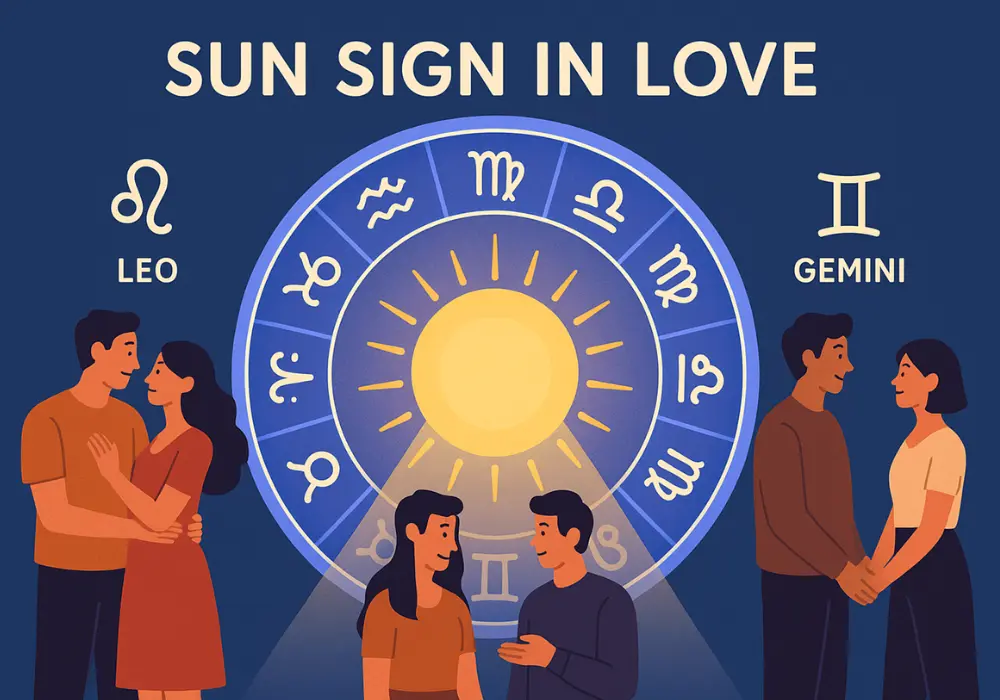
Sun: Identity and Personal Direction
The Sun is commonly read as identity, confidence and personal direction. Between two people, it can show how someone wants to be recognised, what they take pride in and how they describe the kind of life they want to build.
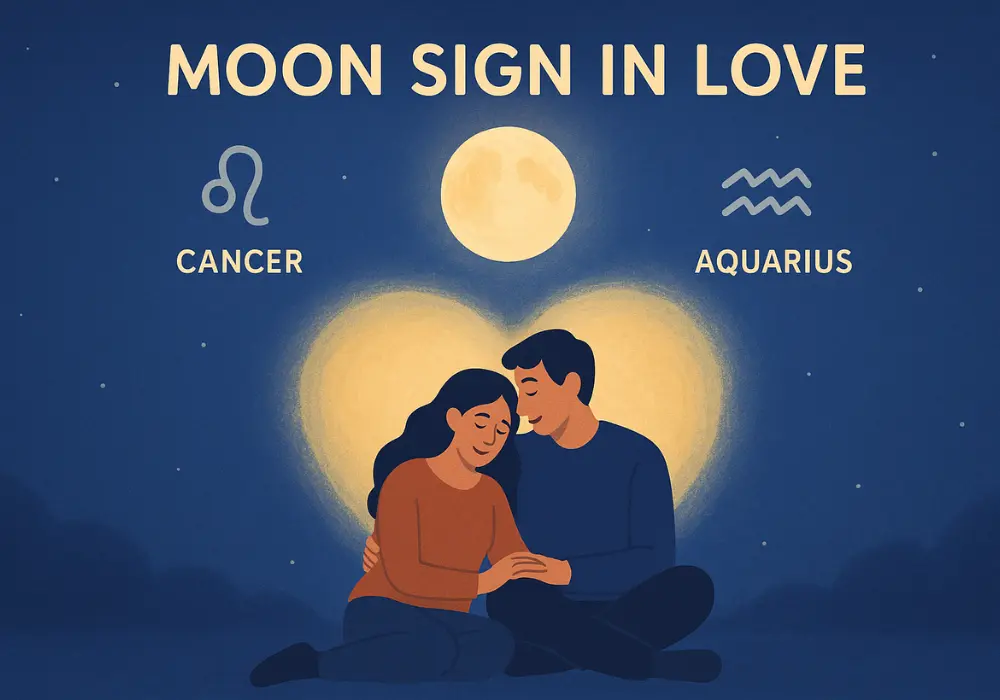
Moon: Emotional Safety and Instinctive Response
The Moon is commonly used to describe emotional safety, instinctive reactions and the kind of reassurance that feels useful. In a relationship, one person may want frequent check-ins while another needs a calm room and time before speaking.
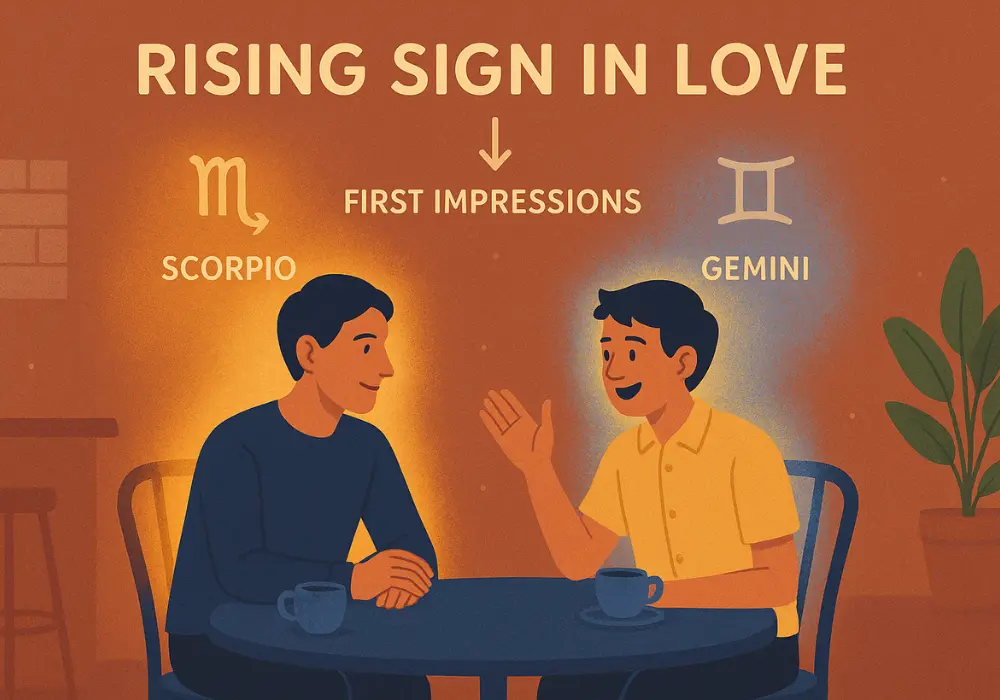
Rising: Outward Behaviour and Immediate Response
The Rising sign, also called the Ascendant, is read through outward behaviour and first response. It can describe how someone enters a room, starts a conversation, handles a new setting or appears before private feelings become visible.
Why the Three Placements Can Look Different
A person can be direct about personal goals yet cautious about emotional disclosure. Someone else may need reassurance quickly but appear reserved during a first meeting. Those differences are not a contradiction; they show that identity, private response and social presentation are not the same question.
Birth-chart interpretation treats these placements as patterns to compare, not as fixed proof of behaviour. A useful reading tests the description against what two people actually do: who starts difficult conversations, who needs time to reply, who asks for reassurance and who changes plans when pressure rises.
How the Big Three Show Up Between Two People
| Placement | Question to ask | Observable example |
|---|---|---|
| Sun | How does each person express identity? | One wants public recognition while the other values quiet competence. |
| Moon | What does each person need when unsettled? | One asks to talk at once while the other returns after a short pause. |
| Rising | How does each person enter contact? | One starts with humour while the other watches the room before speaking. |
The comparison becomes more useful when the placements are read together. A confident Sun may set the tone, a sensitive Moon may decide whether the tone feels safe, and a Rising sign may affect how the first exchange begins. No single placement should be treated as the verdict on the relationship.
Why Birth Time Matters for Rising
The Rising sign depends on the eastern horizon at the time and place of birth, so an accurate birth time matters more for the Ascendant than for a basic Sun-sign comparison. If the time is unknown or rounded, treat the Rising result as less certain and avoid building a strong conclusion on it alone.
Sun Moon & Rising Mode vs Full Chart
The Sun Moon & Rising mode is a sign-level comparison built around the Big Three. It is useful when the question is how identity, emotional needs and first response meet. Full Chart compatibility covers a wider Western astrology comparison, including planets, houses and aspects when the required birth details are available.
How to Read the Three Placements Together
Start with the Sun to understand each person’s visible priorities. Move to the Moon to ask what happens when one person feels hurt, ignored or overloaded. Then look at the Rising sign to see how contact starts and how a first impression may differ from the private response.
For an applied comparison between two people’s placements, read the Big Three match breakdown. The Sun and Moon guide narrows the question to identity and emotion, while the Moon sign relationship guide focuses on reassurance and repair.
FAQs
Why can someone seem different from their Sun sign?
The Moon and Rising describe other parts of the comparison. A person may want recognition yet need privacy when upset, or appear quiet at first and become expressive after trust develops.
Does the Rising sign require an exact birth time?
The Ascendant is time-sensitive, so a reliable birth time makes the result more useful. When the time is uncertain, treat the Rising description as provisional.
Is the Moon more important than the Sun?
Neither placement replaces the other. The Sun describes identity and direction, while the Moon describes emotional safety and instinctive response.
Is Big Three comparison the same as Full Chart compatibility?
No. Big Three comparison is a focused sign-level view. Full Chart compatibility examines a wider set of Western astrology placements, houses and aspects.
A Practical Starting Point
- Write down each person’s Sun, Moon and Rising signs.
- Ask what each person does when they feel proud, hurt or uncertain.
- Compare the sign-level pattern with lived behaviour instead of treating it as a fixed label.
- Use Full Chart compatibility when the question depends on planets, houses or aspects.