Why Sign Matching Feels Right but Falls Short
Two people compare their Sun signs and feel immediate relief when they see a positive match. The description sounds accurate, the traits seem complementary, and early attraction feels confirmed by astrology itself. For a while, that reassurance feels enough.
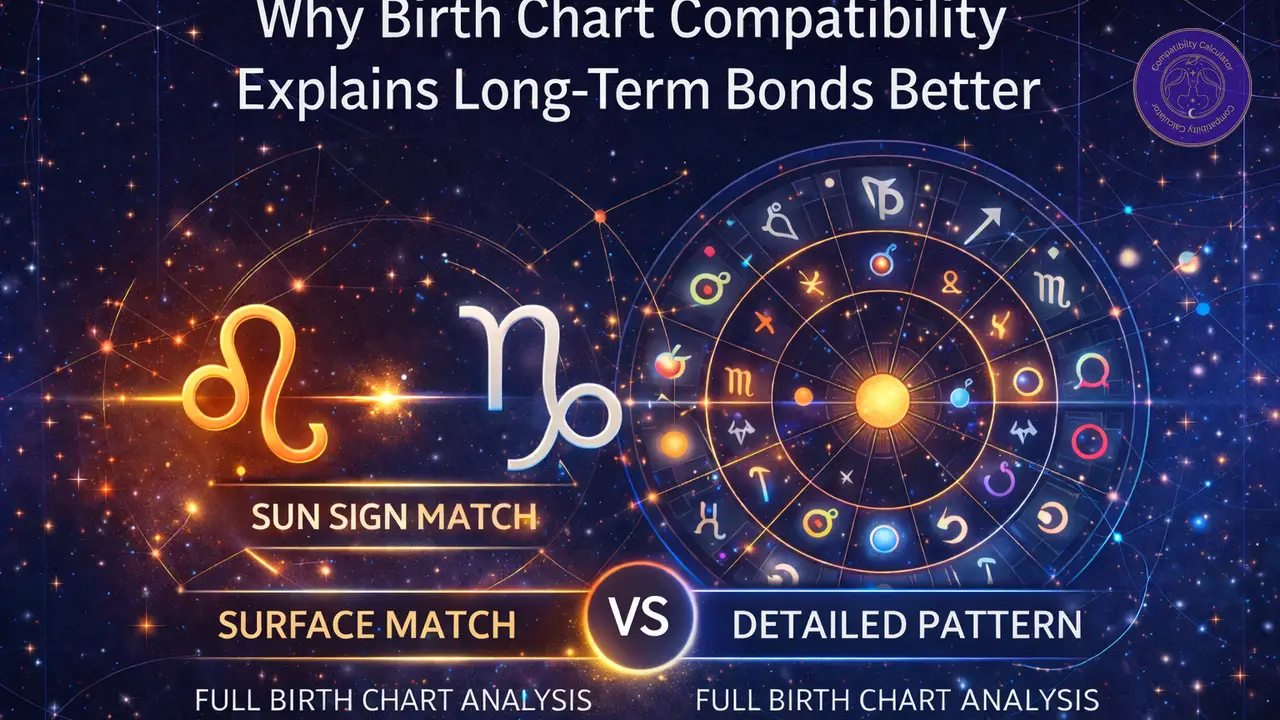
Months later, confusion sometimes appears in areas that were never mentioned in the simple comparison. One partner reacts emotionally in ways the other does not understand. Communication patterns begin to clash. Responsibility feels uneven during stressful periods. The original sign match still looks good on paper, yet daily life feels more complicated.
This gap happens because sign matching focuses on visible personality rather than on the full interaction of the birth charts. A single placement can describe identity clearly, yet it cannot explain how two people handle pressure and disagreement and emotional withdrawal, and practical obligation over time.
The Problem With Single Sign Comparison
Single sign comparison simplifies compatibility into traits, but relationships are shaped by patterns.
- It does not show how each person responds when hurt or overwhelmed.
- It does not reveal how disagreements are discussed or avoided.
- It does not explain who carries responsibility when life becomes demanding.
- It does not predict how emotional reassurance is given or withheld.
These missing layers become visible only after attraction settles and routine begins. When the full birth chart is considered, compatibility is examined through emotional habits and communication rhythm and responsibility patterns, and shared direction rather than through personality traits alone.
Surface similarities can create attraction, but wider chart interaction gives more questions about how the pair handles pressure and repair.
The Hidden Layers That Shape Endurance
Attraction rarely disappears because two people dislike each other. It weakens when repeated pressure exposes differences that were never examined in the beginning. A full birth chart comparison looks at how partners respond in those moments rather than focusing only on shared traits.
How Two People Handle Stress
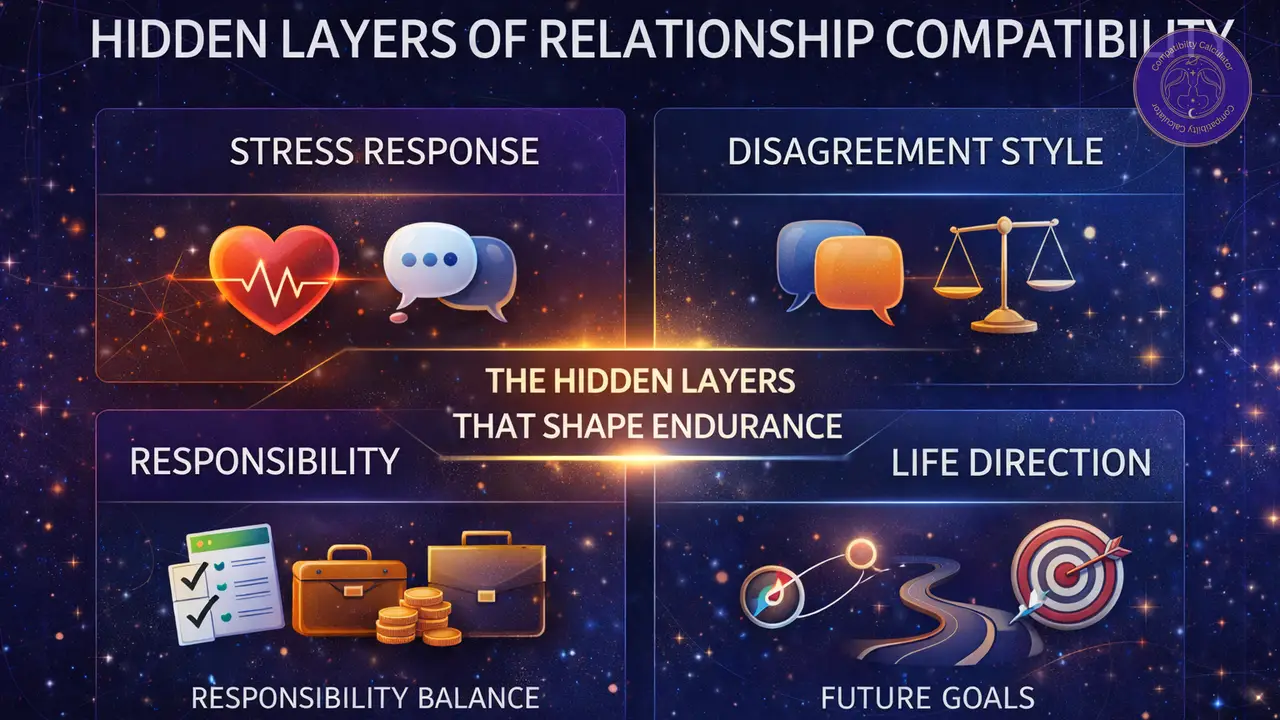
Stress reveals instinctive reactions. One partner may seek reassurance and emotional discussion immediately, while the other may become quiet and focus on solving the problem privately. If these reactions are understood, tension decreases quickly. If they are misread as indifference or overreaction, insecurity grows with each stressful episode.
How Two People Handle Disagreement
Disagreement does not damage a relationship by itself. The damage appears when communication styles clash repeatedly without adjustment. One partner may prefer direct statements, while the other needs careful wording and emotional sensitivity. When tone and timing are respected, conflict remains contained. When one style overrides the other, resentment slowly accumulates.
How Two People Handle Responsibility
Responsibility becomes visible in everyday tasks and financial pressure and family obligations, and unexpected setbacks. If both partners contribute in a way that feels fair, stability increases. If one person consistently carries the heavier load, fatigue develops even if affection remains strong.
How Two People Handle Direction
Direction involves more than ambition. It includes where to live and how to manage money and how to balance work and personal life, and what kind of lifestyle feels meaningful. When these priorities align, movement feels steady. When they diverge without discussion, the relationship begins pulling in different directions.
Pressure Point Comparison
| Area | When Aligned | When Misaligned |
|---|---|---|
| Stress response | Reactions are understood and adjusted | Reactions are misinterpreted repeatedly |
| Disagreement style | Tone and timing are respected | Communication feels harsh or dismissive |
| Responsibility | Duties feel shared and fair | One partner feels overburdened |
| Direction | Priorities are discussed openly | Future plans move apart silently |
Enduring bonds become visible under pressure rather than during attraction. A full birth chart comparison studies these pressure points carefully, because they determine whether closeness strengthens or weakens as life becomes more demanding.
Why Some Relationships Strengthen Over Time While Others Fade
Attraction creates momentum in the beginning, yet development across years depends on how both partners adapt when patterns repeat. A full birth chart comparison not only examines harmony, but also examines friction and whether that friction leads to adjustment or avoidance.
The Attraction Phase
During the early stage, similarities feel magnified, and differences feel manageable. Conversation feels engaging, emotional reactions are interpreted generously, and responsibilities have not yet been fully tested. At this stage, even noticeable differences can appear charming rather than challenging.
The Reality Phase
As routine forms, emotional habits become clearer. One partner may need reassurance more frequently than expected, or one may approach money and obligation differently than assumed. These differences do not appear suddenly, yet they become harder to ignore once daily decisions and shared responsibilities increase.
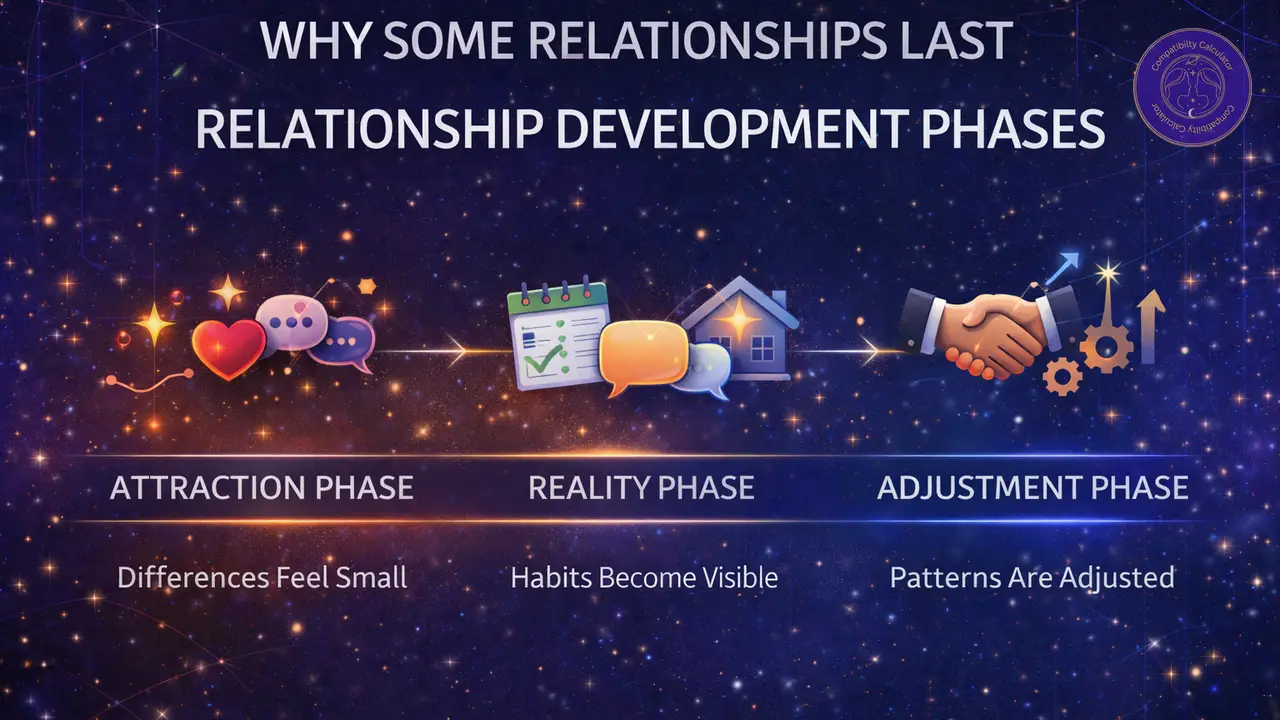
The Adjustment Phase
This phase determines durability. When both partners recognize recurring tension and adjust their behavior intentionally, friction becomes a source of maturity. When the same misunderstandings repeat without reflection, affection gradually weakens even if attraction once felt strong.
Development Pattern Comparison
| Phase | When Growth Occurs | When Distance Increases |
|---|---|---|
| Attraction | Differences are acknowledged early | Differences are minimized or denied |
| Reality | Concerns are discussed honestly | Concerns are postponed repeatedly |
| Adjustment | Behavior changes after conflict | Conflict repeats without change |
The full birth chart perspective becomes valuable here because it shows not only where harmony exists but also where repeated tension is likely to surface. When partners understand these patterns in advance, they can prepare for them instead of being surprised by them.
If you want the broader method behind this comparison, the guide to birth chart compatibility explains how two complete charts are read together. You can also use the compatibility calculator tool when you want a quick result before reading the deeper patterns.
For sign-level context, Sun, Moon, and rising sign compatibility shows why one placement rarely tells the whole story. The page on astrology compatibility calculator accuracy also explains how to read any score as guidance rather than as a fixed verdict.
Conclusion – Looking Beyond Surface Harmony
Birth chart compatibility explains bonds that endure because it studies interaction rather than impression. A single sign match may describe attraction clearly, yet only a layered chart comparison reveals how two people handle stress and disagreement and responsibility and shared direction as time passes.
When couples examine the full pattern, they gain realistic awareness instead of false certainty. That awareness allows them to strengthen vulnerable areas consciously while appreciating the areas that already feel stable. Compatibility then becomes less about prediction and more about understanding how two personalities function together under real conditions.
Frequently Asked Questions
Is Sun sign compatibility meaningless?
Sun sign compatibility is not meaningless, since it describes visible personality and shared style clearly. It becomes incomplete only when it is treated as the entire picture rather than as one layer within a larger pattern.
How many chart factors should be considered for realistic compatibility?
Realistic compatibility requires examining emotional response and communication style, and responsibility patterns, and shared priorities instead of focusing on one placement. The more layers that are considered together, the clearer the relationship dynamics become.
Can difficult planetary interactions still support a lasting bond?
Difficult interactions can support endurance when both partners respond with awareness and adjustment rather than defensiveness. Tension becomes constructive when it leads to behavioral change instead of repeated blame.
Why does early chemistry sometimes fade?
Early chemistry highlights attraction and shared excitement, yet deeper patterns appear only after routine forms and pressure increase. When underlying differences remain unexamined, initial enthusiasm gradually loses its strength.