Emotional Compatibility Is About Emotional Pace, Not Agreement
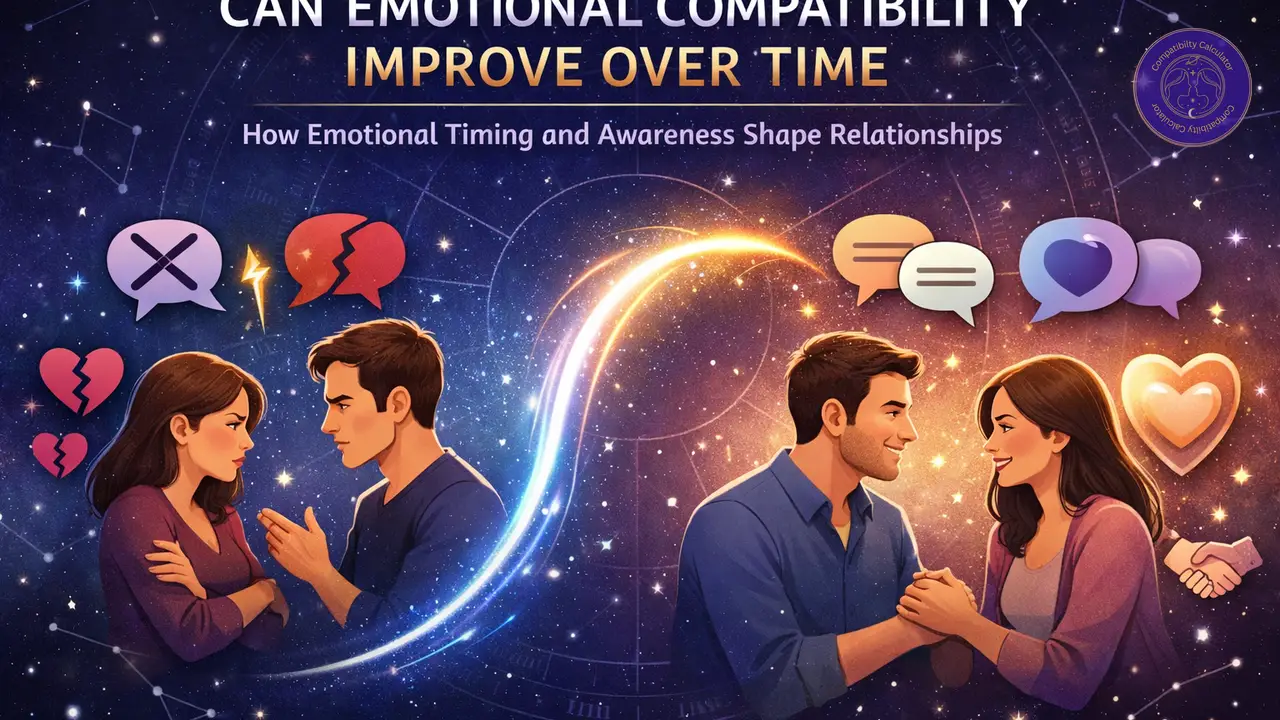
Emotional compatibility does not mean two people agree on everything. It means their emotional rhythm feels safe when stress appears. Many couples assume harmony during happy moments proves alignment, yet real compatibility becomes visible when disappointment, silence, or misunderstanding enters the room.

A relationship can feel smooth for months because nothing serious has tested it. The real pattern shows itself during the first repeated argument. That is when emotional pacing begins to matter more than attraction.
Different Emotional Speeds
Two people can care deeply for each other and still react very differently during tension. These differences usually appear in small repeated moments.
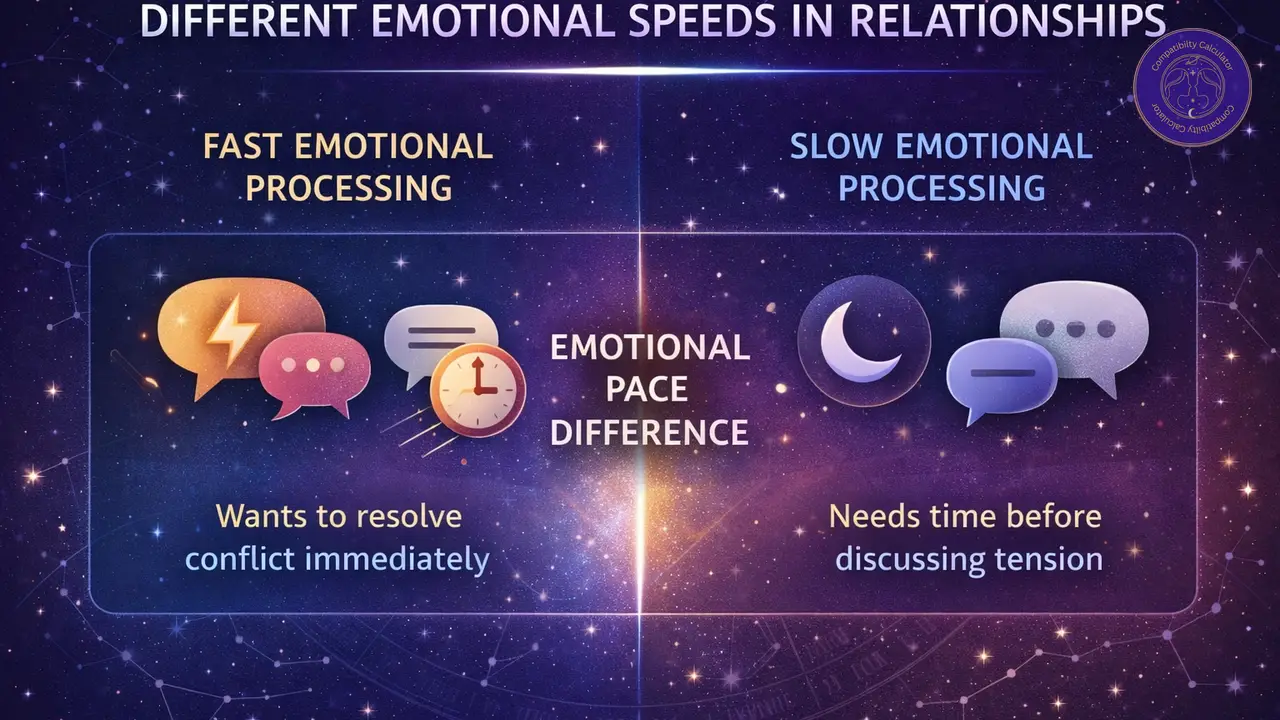
- One partner wants to resolve the argument immediately, while the other needs several hours before speaking again.
- One partner keeps talking to clear the air while the other grows quiet to regain control.
- One partner sends long emotional messages explaining every detail, while the other replies in short lines and believes fewer words reduce drama.
- One partner may feel hurt for several days, while the other resets emotionally the next morning and assumes everything is fine.
These differences do not automatically mean incompatibility. They reveal emotional timing gaps. When neither person understands the other’s pace, frustration builds quietly.
Different Comfort Levels With Vulnerability
Emotional compatibility also depends on how safe each person feels when expressing insecurity. Vulnerability shows itself in daily interactions.
- One partner openly shares fears about abandonment or rejection, while the other avoids discussing personal weakness because it feels uncomfortable.
- One partner needs verbal reassurance after conflict, while the other believes love should already be understood without repeating it.
- One partner reacts strongly to tone changes during an argument, while the other focuses only on the literal meaning of words.
- One partner revisits old hurts to process them fully, while the other believes that the past should stay closed once discussed.
When these patterns collide, neither person feels fully understood. The conflict is not about the topic itself. It is about how emotional exposure is handled.
Same Situation, Different Emotional Reactions
| Situation | Partner A Reaction | Partner B Reaction |
|---|---|---|
| Delayed reply to a message | Feels rejected and questions the importance | Assumes the delay is normal and waits calmly |
| Public criticism | Feels embarrassed and withdraws | Laughs it off and moves forward |
| Canceled plans | Feels rejected and questions importance | Raised voice during an argument |
| Raised voice during an argument | Interprets it as emotional threat | Sees it as momentary frustration |

The table shows that the same event can create very different emotional experiences. Compatibility depends on whether both people learn to recognize these differences instead of judging them.
Early Stage Compatibility Illusion
Why Attraction Can Hide Emotional Differences
Strong attraction can temporarily mask emotional mismatch. During the early stage, both partners try harder to be patient and accommodating. Small irritations are ignored because the connection feels exciting. Emotional differences remain present, but they do not feel urgent.
The shift begins once comfort replaces novelty. That is when habits appear more clearly. What once seemed charming may start to feel irritating because repetition exposes patterns.
The Role of Sun and Moon in Early Emotional Timing
The Sun represents identity and direction. During the early stage, each person shows their Sun qualities more confidently. They present who they believe they are and how they want to be seen. The Moon represents emotional safety and instinctive response. As comfort grows, Moon patterns surface. These patterns reveal how each person reacts when they feel insecure, ignored, or misunderstood.
Emotional compatibility depends more on Moon reactions than on Sun presentation. Identity can impress. Emotional response must feel safe.
What Actually Changes Over Time
How Repeated Conflict Creates Awareness
Time alone does not change emotional patterns. Repeated experience does. When the same disagreement appears again and again, both partners begin to notice their own reactions more clearly. At first, each person defends their position. After several cycles, reflection slowly replaces impulse.
What Growth Looks Like in Behavior
Emotional improvement becomes visible through small adjustments that repeat consistently.
- They stop interrupting each other in the middle of sentences and allow the other person to finish speaking.
- They explain hurt directly instead of attacking character or bringing up unrelated past mistakes.
- They ask for space openly instead of disappearing without explanation.
- They return to conversation after cooling down without waiting for the other person to chase them.
These shifts do not happen in one conversation. They appear gradually as both people recognize that repeating the same reaction creates the same result.
What Does Not Change Without Effort
Some patterns remain stable unless one or both partners accept responsibility.
- One partner continues shifting blame instead of admitting personal mistakes.
- One partner shuts down emotionally and refuses discussion whenever tension rises.
- One partner uses silence as punishment rather than as a calming pause.
- One partner mocks vulnerability instead of respecting emotional honesty.
When these behaviors stay unchanged for years, emotional compatibility does not improve simply because time has passed.
Early Reaction vs Later Reaction
| Trigger | Early Stage Reaction | After Two Years Reaction |
|---|---|---|
| Forgotten an important date | Immediate anger and personal accusation | Direct expression of disappointment without attacking identity |
| Financial stress | Panic and mutual blame | Calm discussion about practical adjustment |
| Family interference | Defensive arguments and raised voices | Clear boundaries are discussed together |
| Social embarrassment | Public tension followed by silent resentment | Private conversation after the event |
The table shows how reaction patterns can soften when awareness increases. The trigger may stay the same, yet the intensity changes.
Saturn and Emotional Responsibility
Accountability Instead of Ego Defense
Saturn represents responsibility and endurance. In emotional growth, Saturn appears when a person admits fault without needing to win the argument. Accountability reduces repetition because it interrupts defensive cycles.
Endurance Without Resentment
Endurance does not mean tolerating disrespect. It means staying present during uncomfortable conversations instead of escaping them. When both partners remain engaged without collecting silent resentment, emotional pacing begins to align more naturally.
Improvement usually begins when both people feel safe enough to respond differently. The guide to emotional safety and trust in astrology compatibility explains why repair becomes easier when consistency replaces guessing.
What Determines If Compatibility Truly Improves
Emotional Safety as the Turning Point
Emotional compatibility improves only when both partners feel safe during disagreement. Safety does not mean absence of conflict. It means conflict does not threaten respect or stability. When emotional safety grows, tension becomes discussion instead of emotional danger.
Signs Emotional Safety Is Growing
Emotional safety becomes visible through consistent behavior.
- Disagreements no longer create fear of abandonment or dramatic withdrawal.
- Apologies are offered without being forced or demanded repeatedly.
- Tone softens faster after tension instead of staying sharp for days.
- Both partners admit when they overreact without shifting blame.
These patterns signal that the relationship can hold discomfort without collapsing into defensiveness.
Signs Emotional Safety Is Not Growing
Lack of safety also appears clearly in daily interactions.
- Arguments feel personal every time rather thanbeing focused on the issue.
- Old mistakes are reused as weapons during new disagreements.
- One partner consistently feels dismissed when expressing hurt.
- Silence becomes punishment instead of space for reflection.
When these behaviors remain unchanged, emotional compatibility stays limited even if affection continues.
Growing Compatibility vs Stagnant Compatibility
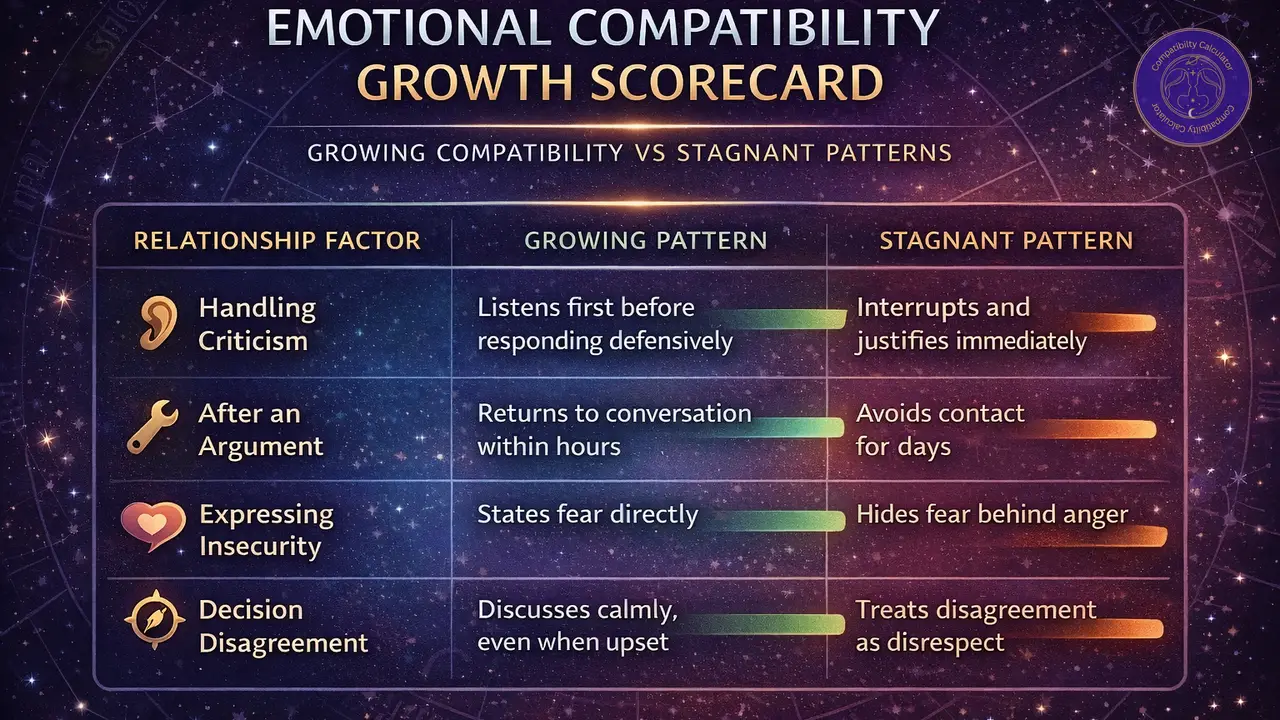
| Behavior | Growing Pattern | Stagnant Pattern |
|---|---|---|
| Handling criticism | Listens first before responding defensively | Interrupts and justifies immediately |
| After an argument | Returns to conversation within hours | Avoids contact for days |
| Expressing insecurity | States fear directly | Hides fear behind anger |
| Decision disagreement | Discusses calmly, even when upset | Treats disagreement as disrespect |
The contrast shows that growth is visible through tone, timing, and recovery speed rather than through the absence of conflict.
Identity Growth and Relationship Adjustment
Sun Growth and Direction Changes
The Sun represents identity and direction. As individuals mature, personal direction may shift. When both partners respect each other’s evolving identity, emotional compatibility strengthens because neither feels restricted by growth. When identity shifts are resisted, tension increases because one partner feels misunderstood.
Moon Security and Repair After Conflict
The Moon represents emotional safety and instinctive response. Growth becomes visible when Moon reactions soften. Instead of immediate shutdown or escalation, each partner pauses and considers the other’s emotional state. Repair becomes faster because fear reduces.
A relationship can have strong attraction and still need work around comfort, timing, and emotional response. The page on emotional vs physical compatibility explains that difference in a plain way, while the compatibility calculator tool gives a quick starting point for comparing the larger match.
Compatibility Scorecard

Use this self-assessment to evaluate emotional growth. Rate each area from 1 to 10 based on honest observation.
- Emotional pace alignment
- Conflict repair speed
- Accountability during tension
- Safety while disagreeing
A higher number does not mean perfection. It reflects consistency in calm recovery.
If you are reading a score after this, give more weight to the pattern behind it than to the number alone. The article on astrology compatibility calculator accuracy explains how to use a result as guidance while still noticing what happens in real conversations.
Reflection Section
Ask yourself practical questions based on behavior rather than hope.
- Do we return to conversation faster now than we did a year ago
- Do disagreements reduce respect or increase understanding over time
- Do apologies happen without pressure
- Do both of us feel heard, even when we disagree
These questions reveal whether compatibility is evolving or remaining static.
Frequently Asked Questions
Can two emotionally different people become compatible?
Yes, emotional difference does not prevent compatibility. Growth occurs when both partners adjust timing and communication rather than forcing similarity.
Does love automatically fix emotional mismatch?
Love creates motivation, but it does not correct harmful patterns without awareness. Emotional habits must be examined and adjusted intentionally.
How long does emotional adjustment realistically take?
Adjustment depends on the frequency of conflict and the willingness to reflect. Some couples reduce intensity within months, while others repeat the same cycle for years without change.
When is incompatibility unlikely to improve?
Improvement becomes unlikely when one or both partners refuse accountability and treat every disagreement as a personal attack instead of a shared problem.